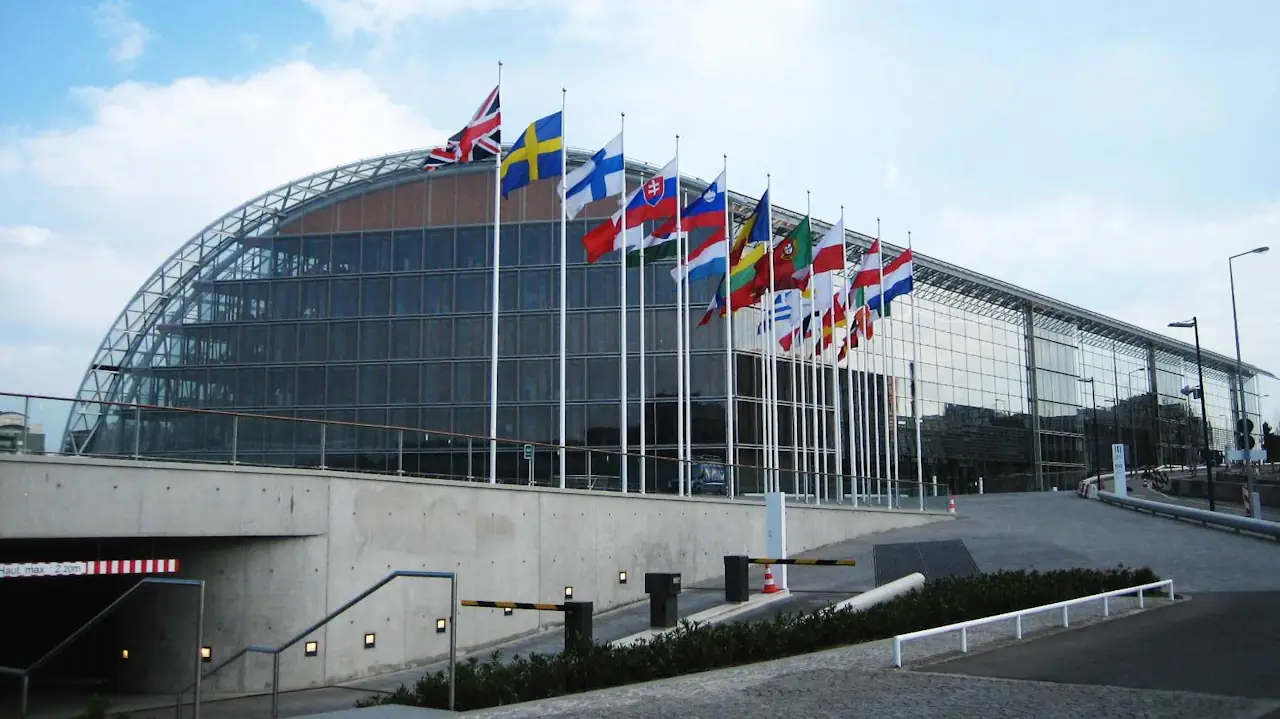

The Bank of Uganda will receive European Investment Bank support to help put its climate-risk rules into banking practice, with Housing Finance Bank named as the first lender to receive technical assistance.
EIB Global, the European Investment Bank’s development arm, and the central bank signed their cooperation agreement on 21 October. The work will cover a roadmap for greening the financial sector, climate-risk disclosure, reporting by financial institutions and the practical use of Uganda’s National Green Taxonomy.
The agreement comes after the bank issued climate-related financial-risk management guidelines for commercial banks in October 2025. Those guidelines took effect on 31 December, according to a Bank of Uganda financial-stability communiqué.
Banks and other supervised financial institutions also face mandatory adoption of IFRS S1 and S2 sustainability-disclosure standards for accounting periods beginning on or after 1 January 2028. The bank has said its climate-risk guidelines provide the basis for those disclosures.
The agreement is intended to help regulators and lenders apply standards already set. It provides technical assistance, not a new credit line or investment fund.
Housing Finance Bank already has green-finance products relevant to the programme. In an August sustainability supplement, the bank said it had received a Shs5bn credit line from the Uganda Energy Credit Capitalisation Company to finance clean-energy technologies.
The facility is intended to support solar irrigation, refrigeration, clean cooking, water heating, grain milling and other equipment used by households, farmers and businesses. The supplement said UECCC expected the partnership to support at least 1,069 connections and that HFB was one of 15 financial institutions working with the company.
The bank has also backed climate-conscious housing. It partnered with Easy Housing in 2025 to finance modular homes built with sustainable timber and locally sourced materials. Its sustainability supplement said it had a pipeline of 30 customers seeking Shs1.5bn for modular, eco-friendly homes.
Neither EIB nor the Bank of Uganda has explained why it selected HFB, or what the bank’s assistance will involve. HFB’s existing products include lending that will need the risk-management, disclosure and project-classification systems the programme is designed to develop.
Uganda’s National Green Taxonomy, launched in 2025, sets criteria for identifying green activities in sectors including agriculture, energy, transport, construction, water and sanitation, waste management and forestry. It envisages integration into banking and capital markets, but identifies capacity constraints and data gaps as obstacles to implementation.
EIB’s programme in Kenya involved the central bank and commercial banks from 2023 to 2025 before producing climate-risk and green-finance guidelines. Uganda’s announcement does not disclose a budget, timetable, participating lenders beyond HFB or the specific work HFB will receive.
The programme will give the bank and lenders a means to apply rules that are already in force ahead of the 2028 disclosure deadline. Its effect on lending will depend on details that neither institution has yet published.