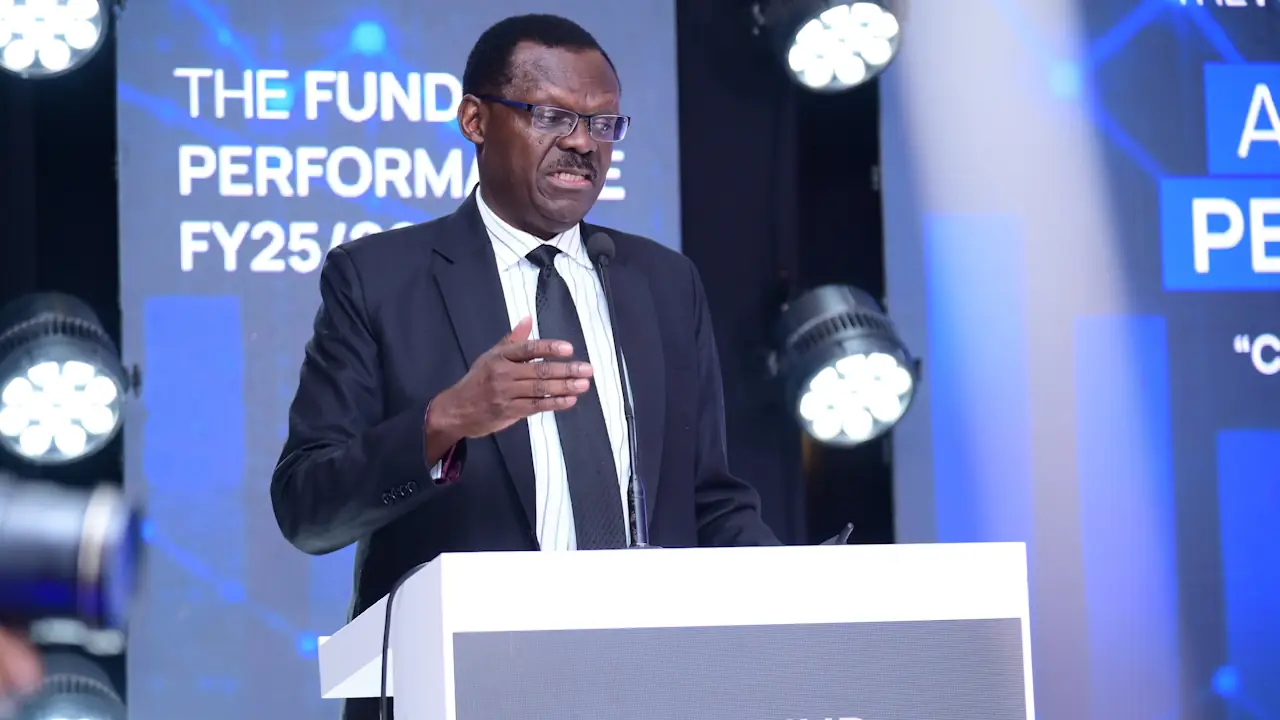
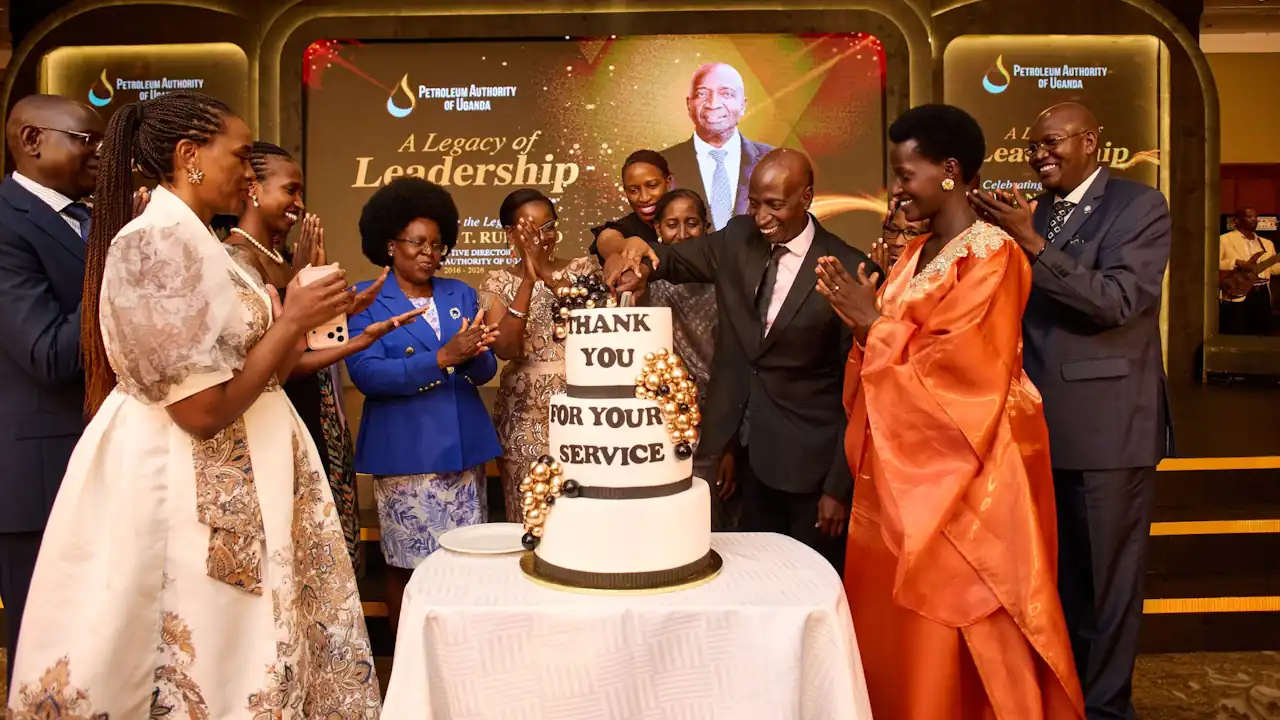

The Petroleum Authority of Uganda (PAU) held a farewell party on Wednesday night for Ernest Rubondo, its first executive director, at the Sheraton Kampala Hotel.
Mr Rubondo, one of the first cohort of petro-scientists trained by the government to build the sector, stepped down on the afternoon of 31 August, after serving two five-year terms, the maximum allowed under the law establishing the authority.
Almost a month later, oil industry executives and Ugandan officials led by the energy minister, Monica Musenero, her junior minister Phiona Nyamutooro, and the permanent secretary, Irene Batebe, joined the PAU board and management, led by the acting executive director, Michael Otonga-Ochan, to send off the man who built Uganda’s oil regulator from scratch.
The regulator was set up under a 2013 petroleum law to oversee Uganda’s oil sector, from exploration to the pump.
Other guests included the TotalEnergies general manager, Phillip Groueix, and his deputy, Mariam Nampeera; the chief executive of the Uganda National Oil Company, Proscovia Nabbanja; the managing director of EACOP Ltd, Guillaume Dulout; the PAU board chair, Lynda Biribonwa, and her predecessor, Jane Mulemwa; a former energy permanent secretary, Kabagambe Kaliisa; and three former energy ministers, Irene Muloni, Richard Kaijuka and Peter Lokeris.
Speaker after speaker paid tribute to Mr Rubondo, who joined the ministry’s petroleum unit, under the Department of Geological Survey and Mines, as a geological assistant in 1984.
Some senior PAU staff were conspicuously absent from the ceremony. This website understands there had been no immediate plan to hold a farewell party for Mr Rubondo until Ms Musenero intervened to set one in motion.
Mr Rubondo handed over to Mr Otonga-Ochan, the director of finance and corporate services, whom he had earlier tried to push out over what a board review called “unsatisfactory” performance during the first five years of his contract.
Ali Ssekatawa, the director of legal and corporate services, had expected Mr Rubondo’s backing as his successor, as is customary. Instead, the board settled on Fred Kabanda, who is expected to take office on 1 December.
Mr Ssekatawa and Mr Kabanda both reached the final round of board interviews, and their names went forward to the president.
The board, led by Ms Biribonwa, appointed Mr Otonga-Ochan to the acting role while it concluded talks with Mr Kabanda, whom Ms Musenero said had the president’s backing for the post, following advice from the authority’s petro-scientists.
Nearly a month after Ms Musenero announced the decision, the board had said little publicly. This website understands the delay centred on inconclusive salary talks.
Mr Rubondo, appointed PAU’s executive director in August 2016, earned a monthly base salary of $20,000 (Shs78.5mn). Mr Kabanda, who has worked as manager of the extractives division at the African Development Bank (AfDB), earns international-staff pay, which the bank describes as competitive.
AfDB managers at the PL1 or PL2 level with more than eight years’ experience earn up to between 157,662 and 168,872 units of account a year, according to the bank.
The bank’s unit of account is pegged to the International Monetary Fund’s Special Drawing Right. The rate used to convert it into a chosen currency is a moving average of market exchange rates over the preceding twelve months, the AfDB website states.
Converted at current rates, that band works out to roughly $17,900 to $19,100 a month (Shs70mn to Shs75mn) — below Mr Rubondo’s pay, though the exact salary AfDB pays Mr Kabanda is not public, and this figure is this website’s estimate rather than a disclosed one.
The board announced Mr Kabanda’s appointment on 9 September, after press reports on the delay, with salary talks still open.
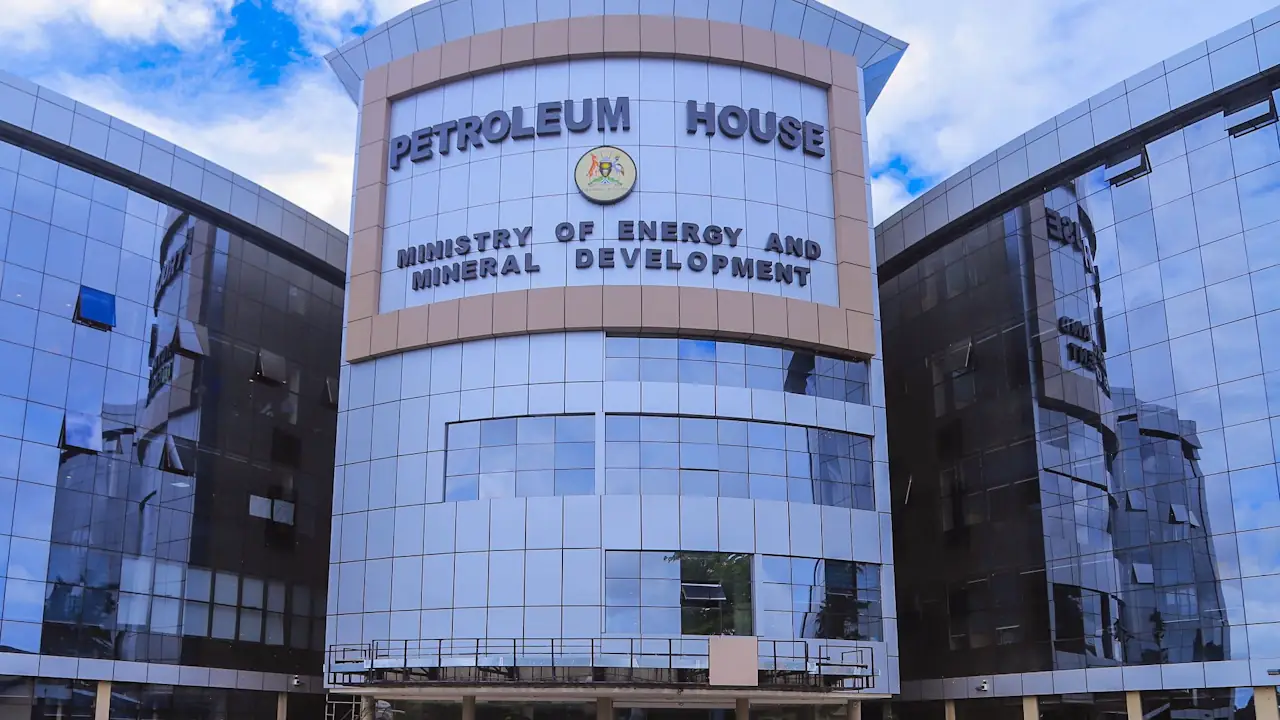
Inside Petroleum House, the PAU’s Entebbe headquarters, the mood was less festive. Some staff, including senior managers, said they were glad to see Mr Rubondo go, though uncertainty over the succession lingers.
($1 = Shs3,922.86, 25 September 2026)