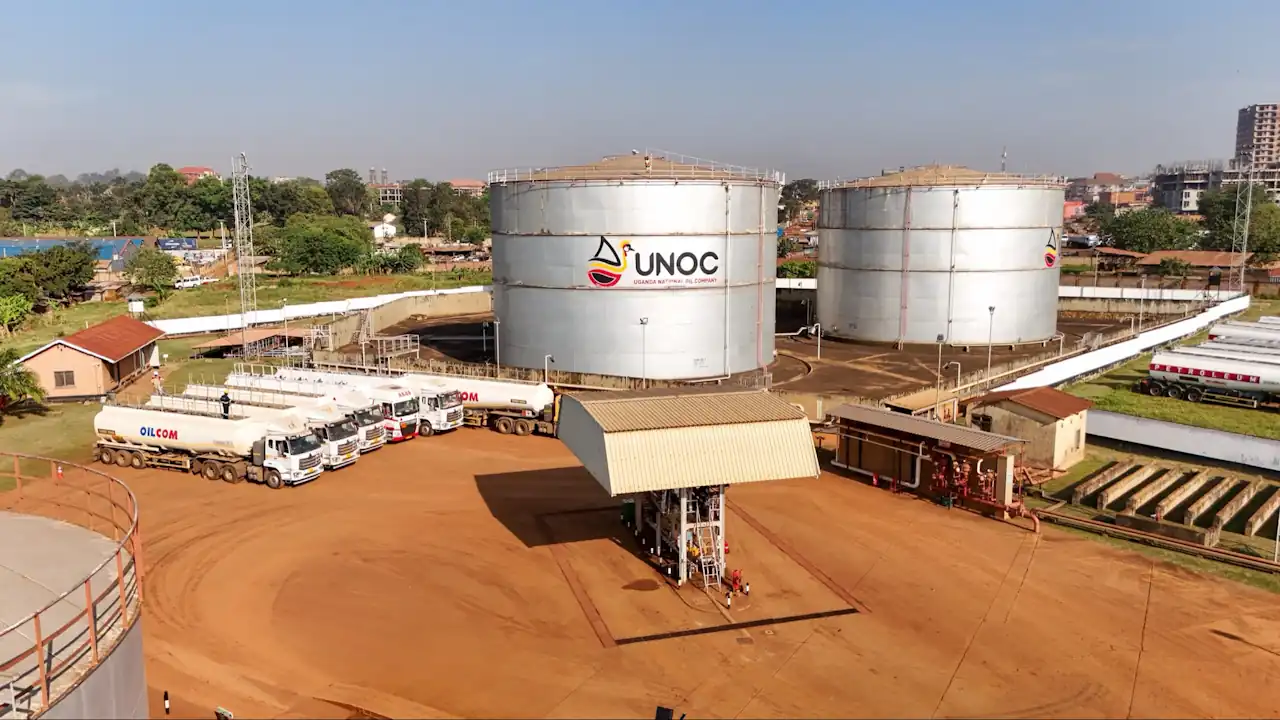

Uganda’s state oil company is going solo on its biggest storage bet yet.
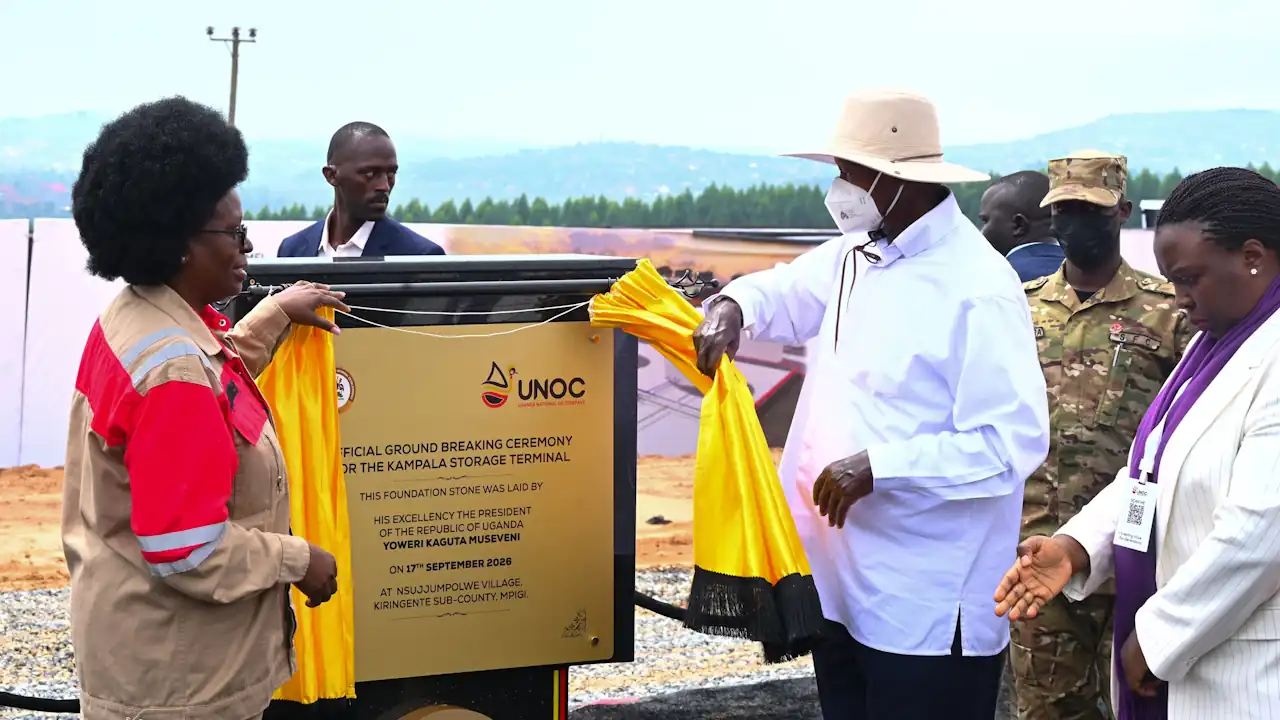
Uganda National Oil Company will own 100 per cent of the new Kampala Storage Terminal, scrapping the joint-venture model it floated back in 2023, as President Museveni breaks ground on the $309.7mn (Sh1.19tn) project this Thursday. The plan feeds a bigger ambition: shore up in-country energy security, and turn Uganda into an oil hub serving markets in northern Tanzania, Rwanda, eastern DR Congo and South Sudan.
Why it matters: Storage terminals are the plumbing of the fuel supply chain — they hold, handle and distribute the petrol, jet fuel, diesel and kerosene that keep the economy moving. Uganda has never had enough of it, and that’s part of why pump prices spike whenever supply hiccups.
By the numbers:
- 320 million litres — KST’s capacity once built, in Mpigi district southwest of Kampala
- 2.9 billion litres — Uganda’s annual fuel consumption, growing 7 per cent a year
- 95 per cent / 5 per cent — the split between fuel trucked in via Kenya’s Northern Corridor versus Tanzania’s Southern Corridor
- $5bn — UNOC’s projected revenue from the project over 15 years
State of play: UNOC bought a 20.2 per cent stake in Kenya Pipeline Company in February, after KPC’s Nairobi listing — a hedge on the artery Uganda’s fuel actually flows through. KPC runs Kenya’s main pipeline from Mombasa’s Kipevu terminal through Nairobi and Eldoret to Kisumu, where most Ugandan oil-marketing companies collect their cargo.
Flashback: UNOC originally wanted a partner. It put out a call in April 2023 for “reputable companies or consortia” to co-develop KST on a 51:49 split. Around the same time, Swiss-based, Dutch-founded trading giant Vitol showed up — first landing the sole rights to import Uganda’s petroleum products, then opening talks with UNOC in December on a $2bn credit line for infrastructure, KST included. Then-junior finance minister Henry Musasizi tabled that loan request in parliament on 16 December.
Zoom out: Once complete, KST will sit alongside the 30-million-litre Jinja Storage Terminal, built under Idi Amin’s government and left to fall into disrepair over the last 40 years.
Storage terminals, wherever they’re built, carry the same standing risks: capacity constraints, environmental concerns and regulatory compliance.
Kampala is already living the last one. Fuel depots keep spreading around the capital, and petrol stations keep popping up flush against residential neighbourhoods and densely populated areas — a regulatory challenge that’s only going to grow alongside KST’s capacity.
Bottom line: UNOC is betting it can build, own and profit from Uganda’s fuel security alone — no equity partner to share the upside, or the risk.