
The IMF expects sub-Saharan Africa to keep growing at last year’s pace through 2027, as export earnings in resource-rich economies cushion the impact of the Middle East war while current-account deficits widen elsewhere.
An update to the IMF’s regional outlook, published on Thursday, puts growth at 4.5 per cent in both 2026 and 2027, matching last year’s pace. This year’s forecast is 0.2 percentage points above April’s, while next year’s is broadly unchanged.
The IMF says Gulf producers rerouting shipments, higher oil output elsewhere and releases from inventories have softened the shock. It also points to exchange-rate reforms and fuel-subsidy reductions in Ethiopia and Nigeria, structural reforms in South Africa, and progress on restructuring sovereign debt in Ethiopia, Ghana and Zambia.
Oil exporters’ current-account surplus is forecast to nearly triple as a share of GDP this year, from 1.6 to 4.4 per cent. Economies that the IMF classifies as non-resource-intensive remain the region’s fastest growers, but their growth is expected to slow to 6 per cent while their current-account deficit widens to 5.8 per cent of GDP.
The steady regional growth forecast also conceals rising inflation in the typical economy. Median inflation is projected to rise from 3.4 per cent in 2025 to 5 per cent in 2027. The weighted regional average, by contrast, falls this year before holding steady next year, reflecting sharp declines in several high-inflation economies rather than a broad easing of inflation across the region.
“External buffers remain protected, on average, but debt vulnerabilities are elevated in several economies, debt-service costs are absorbing scarce resources, and declining external assistance is further constraining development spending,” Seedy Keita, the Gambian finance minister and chair of the African Caucus, and Kristalina Georgieva, the IMF’s managing director, said in a joint statement on Wednesday.
Interest payments absorb about 12 per cent of government revenue, excluding grants, at the median across countries, based on the IMF’s 2025–27 estimates. Meanwhile, the OECD projects bilateral aid to the region to fall a further 12 per cent this year after dropping by roughly a quarter in 2025.
Eurobond issuance reached about $12bn (Shs47.9tn) through September, and sovereign borrowing spreads have narrowed, the IMF says. But higher benchmark rates keep financing costly: the US 10-year Treasury yield rose from 4 per cent at the end of February to 5.2 per cent at the end of September.
Governments have responded to the price shock with fiscal measures, most designed to be temporary, though “only about one in seven was classified as targeted”, the IMF’s African Department said.
The IMF’s preliminary estimates, covering 23 February to 14 September, measure how much of the increase in international benchmark petrol prices reached domestic pump prices. Pass-through was 125 per cent in Rwanda, 67 per cent in Tanzania and 52 per cent in Kenya, with 100 per cent representing a dollar-for-dollar increase. Uganda is not among the 21 countries in the sample.
An illustrative comparison of 19 countries shows that generalised fuel-price smoothing can cost about 4 per cent of GDP. Transfers preserving the benefit that the poorest 40 per cent of households receive from that support cost at most about 0.5 per cent. The transfers would match their benefit from fuel support, not compensate them for the full cost of the shock.
The IMF advises governments to save temporary commodity windfalls, sustain needed fiscal adjustment and ensure any support is funded and targeted. It recommends spending reprioritisation, efficiency gains and domestic revenue mobilisation where public finances are strained, with grants and concessional loans helping protect priority spending.
The Keita–Georgieva statement said that “expansionary fiscal policy would help mitigate the impact of the shock on non-resource-rich economies”. The regional update also says tighter monetary policy may be needed in most countries to prevent inflation from persisting.
“Risks remain decidedly tilted to the downside, including renewed energy supply disruption, sovereign repricing, further aid reductions, and severe weather shocks, especially El Niño,” the update says.
The IMF expects the ongoing El Niño to be “one of the most intense on record” and to persist through February 2027. Above-normal October-to-December rainfall could bring floods to southern Ethiopia and north-eastern Kenya, while below-normal rainfall threatens southern Africa, where Zambia’s maize harvest fell by about half during the 2023/24 drought.
For Uganda, the IMF’s World Economic Outlook, published on 13 October, lowers the 2026 growth forecast to 6.2 per cent from 7.5 per cent in April. It raises the 2027 forecast to 9.9 per cent from 8.2 per cent, the highest published projection for that year in its sub-Saharan Africa table.
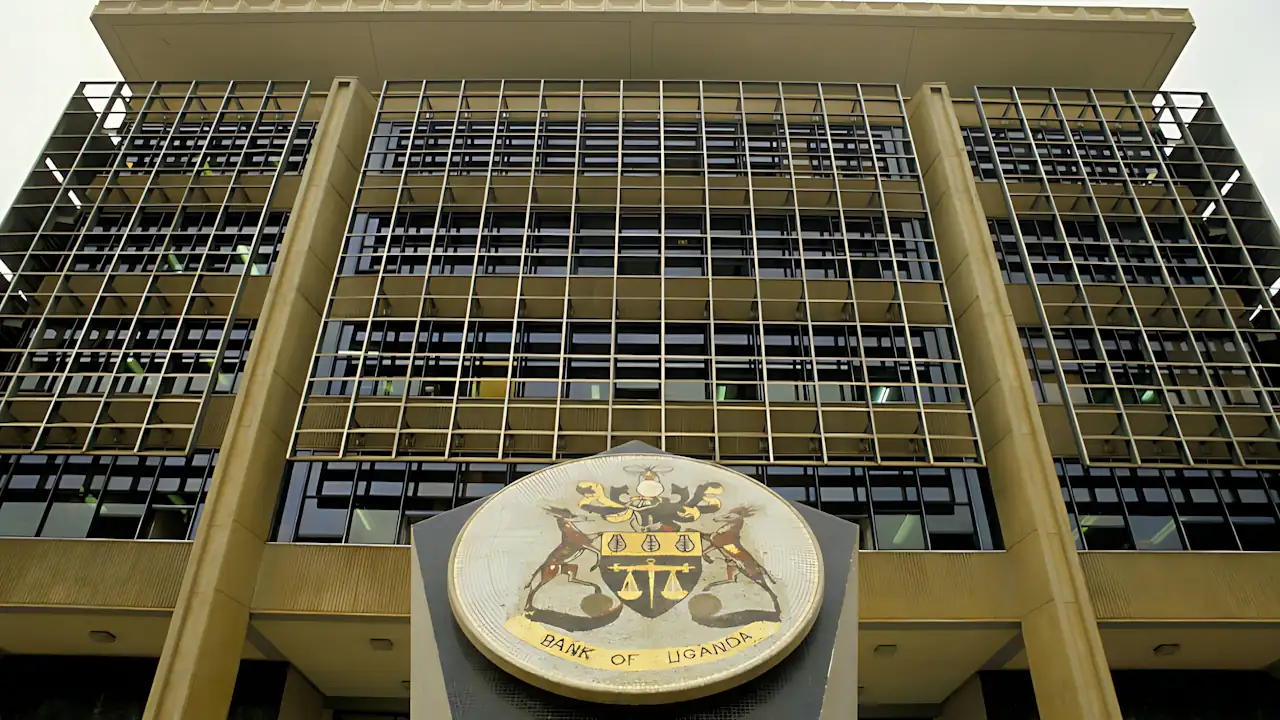
The World Bank and Bank of Uganda have meanwhile lowered their forecasts for the financial year ending June 2027. The World Bank expects growth of 7.4 per cent, while BoU cut its forecast to 6 to 6.5 per cent when it raised its benchmark interest rate on Wednesday. Both are below the 10.2 per cent assumed in the budget; the financial-year forecasts are not directly comparable with the IMF’s calendar-year projections.
The timing of oil production remains important to Uganda’s outlook. Government officials have told Parliament’s finance committee that production is expected before the end of June 2027. The WEO table does not explain the upward revision to the IMF’s 2027 forecast or specify its first-oil assumption.
($1 = Shs3,992.38, the Bank of Uganda’s midday mid-rate on 15 October.)