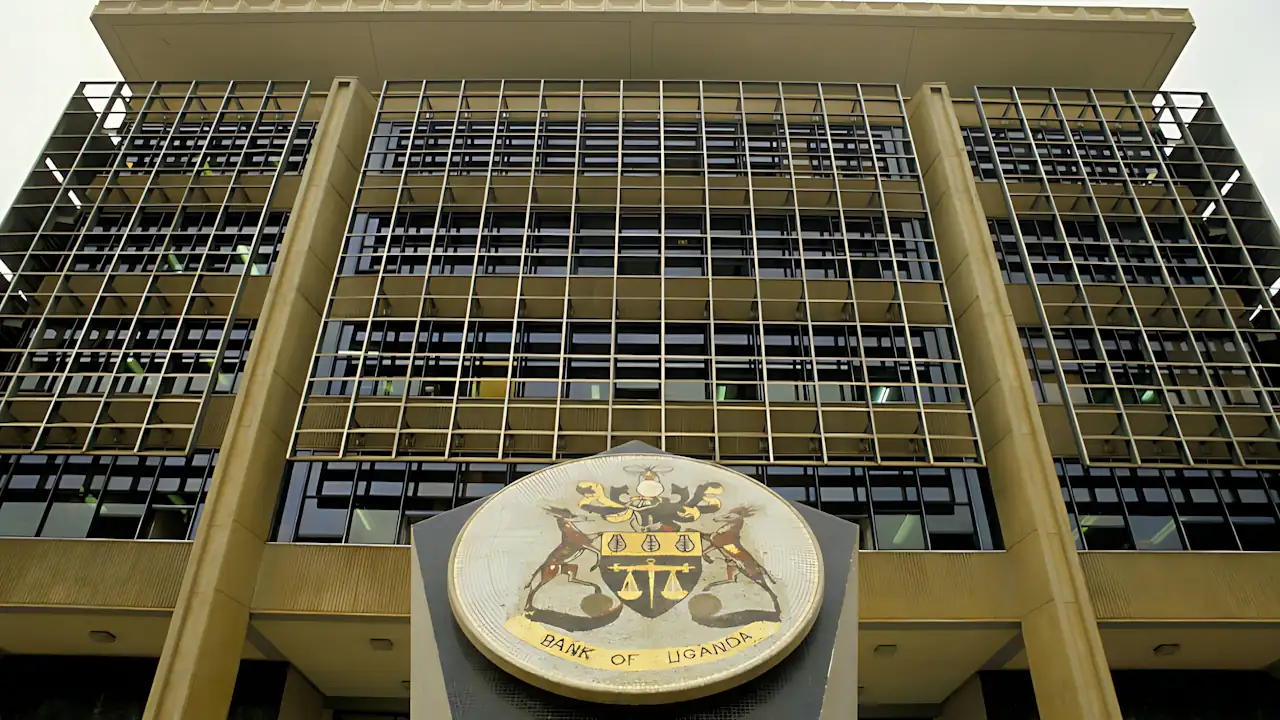


The Bank of Uganda raised its benchmark interest rate to 12 per cent on Wednesday to stop a weak shilling and dearer fuel from feeding a broader rise in prices.
What exactly did the bank do?
It raised the Central Bank Rate (CBR) from 9.75 per cent to 12 per cent, an increase of 225 basis points, or 2.25 percentage points. That is the largest single rise since 2011, and one-and-a-half times the 150 basis points added at a special meeting in July 2015.
The new rate is the highest since early 2017 and the first change since October 2024.
As the bank’s main policy rate, the CBR guides what banks charge one another for short-term loans, which in turn affects what they pay depositors and charge borrowers.
It is not the rate a bank must charge a customer. Lending rates also reflect funding costs, operating expenses, the risk of default and the return banks can earn by lending to the government instead.
Why did the bank act now, when inflation is still below its target?
Headline inflation, which measures consumer prices, reached 4.6 per cent in September, its highest since June 2023. Core inflation, which excludes food and energy, rose to 3.7 per cent from 3.5 per cent in August, according to Uganda Bureau of Statistics figures.
The bank does not set rates on the latest reading alone. Monetary policy affects inflation “with a significant lag”, Adam Mugume, then the bank’s executive director for research and policy, said in a 2018 speech, so the bank steers by its outlook for the next 12 months.
That outlook has worsened. The bank now expects core inflation to average 5.5 to 6 per cent over the next year, up from 4 to 4.5 per cent in the August forecast and above its 5 per cent medium-term target. It puts headline inflation at 7 to 7.5 per cent.
The war in the Middle East has disrupted oil supplies and shipping, and the weaker shilling has added to the cost of fuel at home.
Petrol cost 30.9 per cent more in September than a year earlier and diesel 42.5 per cent more. Transport prices rose 9.8 per cent, their fastest annual increase since July 2021.
Higher fuel costs also raise the expense of moving food, running machinery and distributing imported goods. Some businesses pass those costs on to customers, and a rise that began with fuel can spread into other prices, including those counted in core inflation.
The bank’s statement said the fuel shock “seems persistent” and that inflation “could be entrenched if monetary policy does not contain these price pressures now”. A central bank cannot produce more oil or reopen shipping lanes, but it can try to stop a temporary shock turning into a prolonged rise in prices.
What does all this have to do with the dollar?
Uganda is a net importer of petroleum products and pays for them in dollars. A weaker shilling therefore makes fuel dearer even when the dollar price of oil does not change.
At the end of 2025, $100 cost about Shs362,000. At the Shs4,152.86 the bank quoted at Tuesday’s opening, the same $100 cost about Shs415,000, or Shs53,000 more, before any change in the price of the goods themselves.
Absa linked the weakness to dollar demand from importers in energy, manufacturing and telecoms, and to offshore investors.
Non-residents held $2.7bn of Ugandan government debt in June, up from $878mn at the end of 2024.
These investors need shillings to buy bonds and Treasury bills. When they leave, they sell shillings and buy dollars to take their money elsewhere.
Foreign buying of government debt fell after a record $2.2bn in 2025. Citigroup estimated that about $200mn left Uganda’s markets in the two weeks before the decision.
The dollar also matters to borrowers. About a third of bank lending, Shs9.1tn in August, is in foreign currency. A business that earns shillings but repays dollars must find more shillings for the same debt when the currency weakens.
So how can raising interest rates help the shilling?
An investor weighing Ugandan government securities against investments abroad compares returns, and a higher policy rate lifts what shilling assets pay. That can encourage foreign investors to keep or bring money into Uganda, raising demand for shillings and supplying dollars to the market.
Treasury bill yields averaged 9.5 to 10.1 per cent in September, below the new CBR, and may rise as tighter policy works through the market.
Higher rates do not guarantee inflows, however. Investors also weigh exchange-rate risk, interest rates abroad and the chance of losses when they convert shillings back into dollars. Stephen Kaboyo of Alpha Capital has cited US yields as a factor in the shilling’s fall.
The effect may depend as much on what investors expect to happen next as on the new rate.
Did Wednesday’s decision already strengthen the shilling?
The dollar fell from Shs4,130.24 at the opening on Wednesday to Shs4,075.48 at midday and Shs3,951.05 at the close, according to Bank of Uganda rates. That is a fall of 4.3 per cent from open to close, with most of it after midday.
Markets can react to a rate decision long before it reaches household borrowing or spending. Mugume said in 2018 that central-bank communication shapes expectations of future rates, “what has been called ‘management by expectations'”.
The size of the increase may therefore have helped by signalling the bank’s resolve to contain inflation and currency weakness, and the prospect of better returns on shilling assets may also have contributed. A rebound was plausible in any case after the shilling had weakened by 5.5 per cent between 1 and 13 October.
New Vision reported, citing Kaboyo, that the central bank sold dollars late on Wednesday. The bank’s monetary-policy statement did not report any intervention.
The available information does not show how much each factor contributed to the recovery, and one day’s trading does not show that the slide has ended. After the July 2015 special meeting the shilling kept weakening for two more months. After the March 2024 increase it firmed within a month.
Will higher interest rates bring down fuel and transport prices?
The Bank of Uganda cannot lower the dollar price of oil. It can influence the exchange rate that sets what importers pay for that oil in shillings.
A steadier shilling would remove one source of pressure on pump prices, although world oil prices, taxes and distribution costs also set the final price.
Higher rates also discourage borrowing and spending, which limits how far businesses can raise prices without losing sales. That may slow inflation, but it does not mean prices fall. A price that rises more slowly is still a higher price.
Will bank loans become more expensive?
A change in the CBR first moves borrowing costs between banks and returns on financial investments. Banks then decide how much to pass on to customers, depending on their own costs, liquidity and lending risks.
Research in the IMF Economic Review, published in July and based on more than 632,000 household loans from 2017 to 2023, found that a one-percentage-point rise in the CBR was associated with a rise of about 0.63 percentage points in household lending rates within a quarter. The estimate describes a historical relationship, not a forecast for an increase of this size, and banks and borrowers differ.
Earlier episodes show how uneven the pass-through can be. In 2022 the average lending rate barely moved while the CBR rose from 6.5 to 10 per cent. In 2015 it rose from 20.1 to 24.6 per cent as the CBR went from 11 to 17 per cent, according to Bank of Uganda month-end figures.
In August the average rate on shilling loans was 17.9 per cent against a CBR of 9.75 per cent. The gap reflects funding costs, operating expenses and credit risk, which a change in the CBR does not remove.
The evidence points to higher rates on new loans, though the size and timing will differ by bank.
What happens if I already have a loan?
A fixed-rate loan keeps its agreed rate for the fixed period, whatever happens to the CBR.
On a variable-rate loan, the lender may change the rate as the contract allows. That can raise monthly repayments or, where the agreement permits, lengthen the repayment period. Keeping instalments unchanged while paying a higher rate increases the total cost of the loan.
A CBR announcement does not by itself authorise a bank to raise every borrower’s rate.
Mortgages carry a statutory requirement. Section 11(1) of the Mortgage Act requires a lender that varies the interest rate to give the borrower at least 15 working days’ written notice stating the new rate.
Borrowers can check the interest-rate review clause and notification terms in their facility letters, and ask the bank for a revised repayment schedule showing the new instalment, remaining term and total interest payable.
Is there any benefit for savers?
In August, ordinary shilling savings deposits paid an average of 2.3 per cent, while deposits held for seven to twelve months paid 10.2 per cent, according to Bank of Uganda figures.
Returns on newly issued Treasury bills could rise as policy tightens, although yields also depend on government borrowing and investor demand. Whether banks raise deposit rates is not yet known.
Why was there a special meeting, and could the bank not wait?
The bank cut its regular rate reviews from six a year to four in 2025. They now fall in February, May, August and November, and the next is due on 12 November.
It can also call special meetings, and there is no fixed number. Earlier ones include July 2015, when it raised the CBR by 1.5 percentage points, and March 2024, when it added half a point after the shilling fell to a record low.
The scheduled meeting was less than a month away. But the position the bank described in August had changed: the shilling had weakened sharply, the oil shock had persisted and its inflation forecasts had risen above target.
Raising the rate by so much suggests the bank wanted to act decisively rather than in small steps. It said it was ready to take additional measures.
What else could the Bank of Uganda have done?
The bank has other tools besides the CBR. It can absorb shillings from the banking system through money-market operations, which makes funds scarcer. It can also require commercial banks to hold more of their deposits as reserves, and it had already done so, raising the cash reserve requirement from 11 to 13.5 per cent from 24 September.
Another option is to sell dollars from its foreign-exchange reserves. Uganda held $6.52bn in gross reserves in August, enough for 3.6 months of imports excluding oil-project goods.
Uganda operates a floating exchange-rate system. Mugume said in 2018 that the bank intervenes “solely to dampen disruptive volatility in the exchange rate and not to impede exchange rate adjustments”. The bank repeated this week that it does not target a specific exchange rate.
Sustained selling consumes reserves, and if investors keep leaving or importers keep demanding more dollars than the market supplies, it may only delay depreciation. President Yoweri Museveni said on 9 October that selling reserves to bring down the dollar would amount to squandering them.
Other responses to dear fuel, such as changes to fuel taxes or government spending, fall to fiscal policymakers, not the central bank.
What could go wrong?
Businesses facing dearer credit may postpone investment or cut costs, and households with variable-rate loans will have less income left to spend. These effects restrain inflation, but they also weaken activity.
The bank lowered its growth forecast for the year to June 2027 to 6 to 6.5 per cent from 7 to 7.5 per cent. The revision cannot be read as the cost of the rate rise alone, since depreciation and higher energy prices also weigh on the economy.
Nor is there any assurance that higher Ugandan rates will outweigh oil prices, dollar demand and shifts in global investment flows. The evidence does not yet show whether the shilling holds, whether fuel-driven price rises spread further, or how far dearer credit slows lending and growth.
($1 = Shs3,951.05, the Bank of Uganda’s closing mid-rate on 14 October)