
The Electricity Regulatory Authority (ERA) has held power tariffs for the fourth quarter of 2026 at third-quarter levels, although the oil price in its calculations has fallen 24.5 per cent.
Households served by Uganda Electricity Distribution Company Limited, the state-owned distributor, will pay Shs779.4 per kilowatt-hour (kWh) for consumption between 16 and 80 units and above 150 units, according to a schedule dated 1 October that ERA published on its website on Tuesday. The first 15 units stay at Shs250 for customers whose six-month average does not exceed 100 units a month. Customers above that average pay Shs779.4 from the first unit. Units 81 to 150 cost Shs412 for all customers.
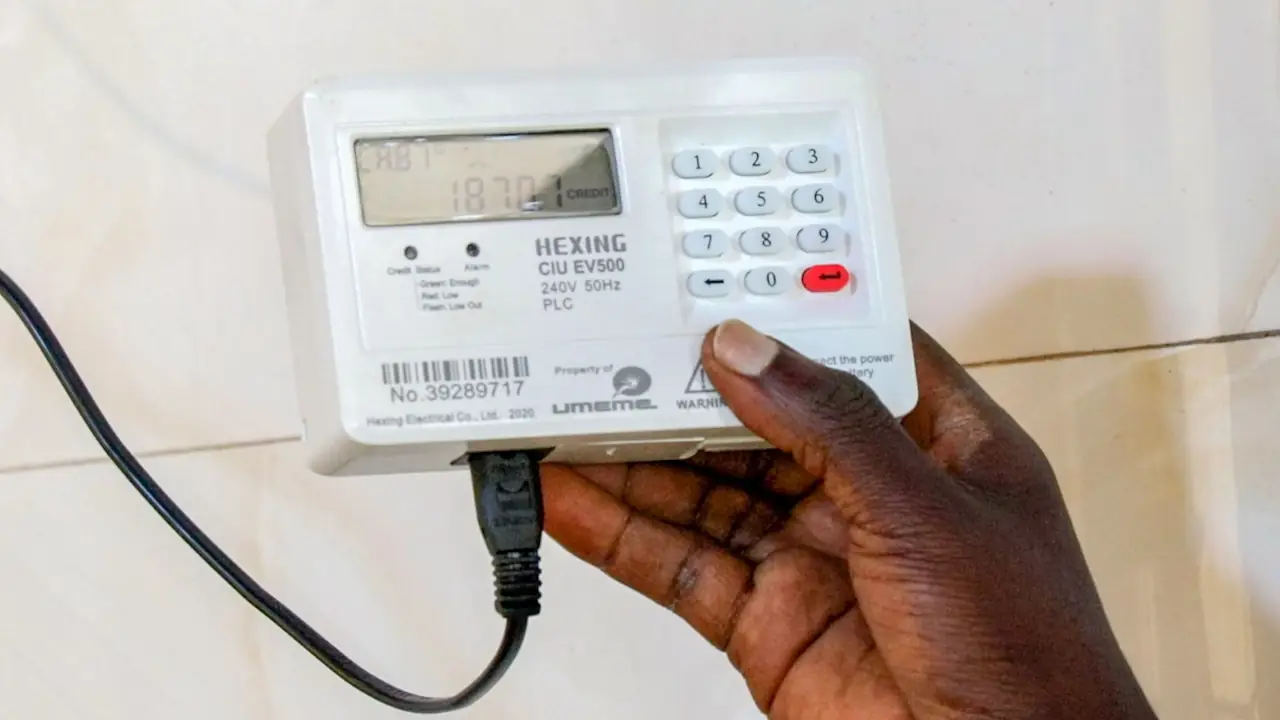
The household rate rose 3.1 per cent from Shs756.2 in July, when ERA lifted the weighted average across all customers by 2.5 per cent. The regulator had held tariffs in the first and second quarters.
The schedule lists the exchange rate, consumer prices, the generation mix and the international price of fuel as the factors ERA considered. It does not say how they were weighed.
Oil is $86.44 a barrel in the calculation, taken from OPEC’s September report, against $114.55 in the third quarter. The shilling, at Shs3,770 to the dollar on 31 August, is 0.2 per cent stronger than the Shs3,777.81 used for the third quarter, while core consumer prices are 1 per cent higher, at an index reading of 141.98.
Oil remains 34.1 per cent above the $64.46 assumed in the 2026 base tariffs, and the dollar costs 4 per cent more than the base rate of Shs3,624.91. ERA’s third-quarter review attributed the oil surge to the conflict in the Middle East. Standard household tariffs now stand 3.1 per cent above base, and commercial and industrial rates between 2 and 2.9 per cent above.
The Bank of Uganda’s data show the dollar at Shs4,023.57 on Monday, 6.7 per cent above the rate in the schedule and about 11 per cent above the base rate. ERA’s third-quarter review estimated that a 4.2 per cent rise in the dollar from the base rate had added Shs12 per kWh to the weighted average tariff.
Petrol cost 30.9 per cent more in September than a year earlier and diesel 42.5 per cent more, the Uganda Bureau of Statistics said, as annual inflation rose to 4.6 per cent, the highest since June 2023. The Stanbic Bank Uganda Purchasing Managers’ Index said higher fuel and transport costs strained supply chains as private-sector growth slowed to its weakest since January.
Large manufacturers pay an average of Shs308.1 per kWh for the first block of consumption and Shs290.6 for the declining block, while extra-large manufacturers pay Shs207.7, or Shs188.7 off-peak, a little over a quarter of the household rate. ERA’s review in June said tariff reductions had stimulated consumption by industrial customers.
ERA’s review forecast data centres taking 856.5 gigawatt-hours (GWh) of annualised energy sales by Uganda Electricity Transmission Company Limited, the bulk supplier, in the third quarter, or 9.9 per cent of the total. The base tariffs assumed 400.3 GWh, or 4.6 per cent.
Extra-large service consumers, defined in the third quarter as those with average demand of at least 10,000kVA, now need at least 20,000kVA. A flat Shs132.2 per kWh applies to them “when Excess Capacity is declared by the System Operator”, 41 per cent below the Shs224.2 average that applies otherwise.
Abroad, Britain’s Ofgem will raise its price cap 4 per cent from October on gas costs, and the Office for National Statistics put electricity, gas and other fuels 6 per cent higher in the 12 months to August. Singapore’s SP Group cut household rates 10 per cent for October to December as fuel costs eased, but warned that tariffs would rise next quarter if the recent increase in global fuel prices persisted.