

Land prices in many African cities skyrocketing. This is because land is a city’s most important asset. As urbanisation progresses, demand for land will increase, and therefore so will land prices, because the supply of land in cities is limited. Investment in public infrastructure and zoning regulations that convert land to alternative uses will also boost land values.
In fact, studies have shown that simply converting rural land to urban use can increase its value by 400 per cent.
All these changes are driven by the government and collective action, not by private individuals. But the beneficiaries of higher land prices will be property owners, unless mechanisms are put in place to recoup the value. City governments across Africa are therefore looking for ways to capture this value, increase revenue and reinvest in public goods and services.
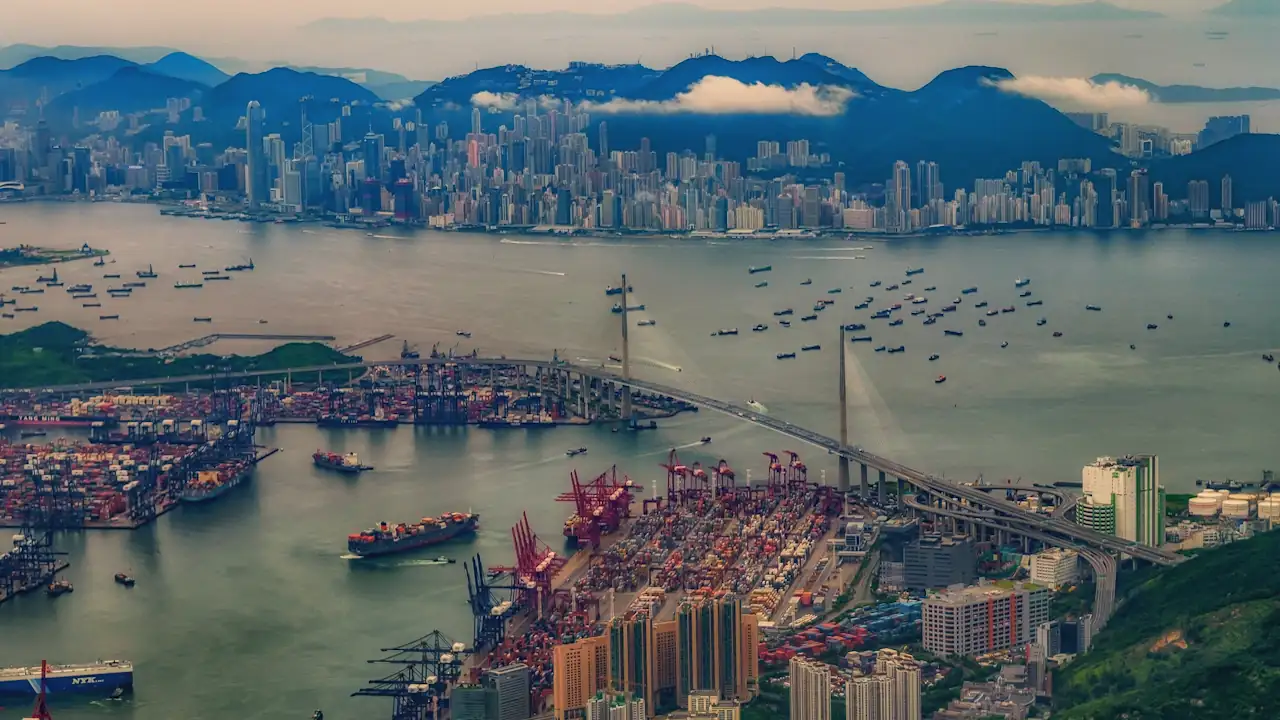
Hong Kong is a prime example of effective land value management. It is often cited as a case study. Land revenues have funded quality public transport and social infrastructure such as schools and hospitals.
As a researcher focused on helping African cities raise funds and financing for large-scale public infrastructure and services, I wanted to learn more about these land-based financing models when I moved to Hong Kong. An important initial finding is that Hong Kong is using multiple and different instruments for different purposes. This article examines just one of these instruments: the land lease system. I will explore other instruments in future articles.
Land lease system
Since 1 July 1997, all land in Hong Kong, except for one plot, has been owned by the People’s Republic of China. The Hong Kong government does not sell parcels of land, but rather leases out the rights to use them for a specified period. The leases, which are now granted for 50 years, are awarded through annual public tenders and auctions administered by the Hong Kong government’s Land Department.
Developers bid for these sites based on a reserve price. This is determined by factors such as location, permitted use, maximum zoning height and minimum required floor area ratio. The successful bidder then pays a one-off land premium to the Hong Kong government and ground rent for the duration of the lease. The rent is currently calculated at 3 per cent of the rateable value of the land.
]Each parcel of leasehold land is usually subject to a development covenant, which sets out the conditions for development. This is to prevent speculative ownership of vacant plots. The requirement is usually that 60 per cent of the agreed floor space must be built within four or five years of the lease being granted. If this does not happen, the government can the land back without compensation. There are exceptions: in April 2020, for example, the Hong Kong government extended covenants by up to six months due to the economic pressures of the Covid-19 pandemic.
All premium and ground rent income is earmarked and paid directly into a Capital Works Reserve Fund which was established in 1982. This fund can only be used to finance public works and further land development. The government estimates that it will receive about $11bn in land premiums from the lease of 18 sites in the 2023/24 financial year.
This system allows the government to retain control over land use while providing private rights of use that generate revenue to invest in infrastructure. In essence, it is building the foundations of a capitalist society on a relatively socialist land tenure system.
Colonial legacy of land
The system dates back to when Britain colonised Hong Kong in 1841. The British government wanted to develop the island’s port into a commercial trading post. A legal framework was developed to attract commercial enterprises, particularly from the United Kingdom; for one thing, Hong Kong was declared a free port. This also meant that the British government could not rely on revenues from customs duties to support the colony. Consequently, there was a strong emphasis on raising revenue from the increasing demand for land.
In contrast, the British colonies in Africa focused on exploiting natural resources. Institutional structures, including those related to land administration, focused on short-term extractive gains rather than long-term trade and economic growth of the colony.
Another difference was that when the British annexed Hong Kong in 1841, the population of the island was only about 7,500 people, including 2,000 boat dwellers. British African colonies such as Uganda, Kenya, and Tanzania not only had much larger indigenous populations, but were already organised into kingdoms, ethnic groups and clans, each with its own customary land management systems.
So while Hong Kong’s land tenure systems were established on a relatively clean slate, in many African contexts, colonisers introduced their own tenure structures, disregarding existing ones, and creating conflict with existing land management practices. These tenure structures were often introduced to exclude Africans from central urban areas. The effects are still being felt in the way African urbanisation is managed today.
Pre-colonial realities and the contrasting colonial objectives have resulted in very different land markets. While African cities often have multiple and overlapping land tenure systems, Hong Kong maintains an exclusive leasehold system from which it generates significant revenue.
Further lessons of running a leasehold system
For a public auction system like Hong Kong’s to work, there needs to be transparent land administration, predominantly state-owned land, and a thriving property market. Developers must be able to convert land into buildings and rent or sell units after paying for the lease. In African cities, despite high demand for land, high construction and mortgage costs pose challenges to converting land into buildings. This may limit the demand for similar auctions where land has enforceable building covenants to prevent speculation.
While Hong Kong’s system has been largely successful, African cities should also consider lessons from its current experience. Importantly, land revenues are volatile and tend to follow macroeconomic cycles. For instance, the Hong Kong government’s revised budget for the year 2022/23 highlighted that land revenue was more than $6bn lower than expected due to lower demand from developers. This means that while land revenue is suitable for funding upfront infrastructure capital costs, its year-on-year volatility makes it unsuitable for funding recurrent expenditure such as health and education. It also means that for any capital expenditure a city invests in with land revenue, there must be a sufficient operating budget to cover the running costs over time.
In addition, high land prices are necessary for land to generate strong returns on investment, which in turn pushes up property prices and rental costs. Therefore, African cities facing acute shortages of affordable housing need to carefully consider supportive policies when pursuing land-based financing to ensure that residents are not priced out of the market.
African cities should continue to pursue land as a source of revenue for infrastructure financing, especially as publicly created value should benefit the public. However, instead of trying to replicate Hong Kong’s unique land lease system, which is shaped by very different historical and institutional factors, they should design land-based financing systems that work in the local context.
This is part of a series of articles looking at Africa’s urbanisation and drawing lessons from other countries.
Astrid R.N. Haas, Adjunct professor, University of Toronto
This article is republished from The Conversation under a Creative Commons licence. Read the original article.