
Uganda is among the eight most polluted countries in the world, with its capital recording fine particulate matter levels nearly nine times the safe limit, according to a new global report.
The 2025 World Air Quality Report, published by Swiss monitoring group IQAir, ranks Uganda eighth globally with a national annual average PM2.5 concentration of 43.0 micrograms per cubic metre, more than eight times the World Health Organisation’s guideline of 5 µg/m³. Kampala fares still worse, placing tenth among world capital cities with an annual average of 44.2 µg/m³.
Only the capitals of India, Bangladesh, Tajikistan, Chad, the Democratic Republic of Congo, Pakistan, Vietnam and Kuwait recorded higher concentrations. Within Africa, only N’Djamena and Kinshasa ranked above Kampala.
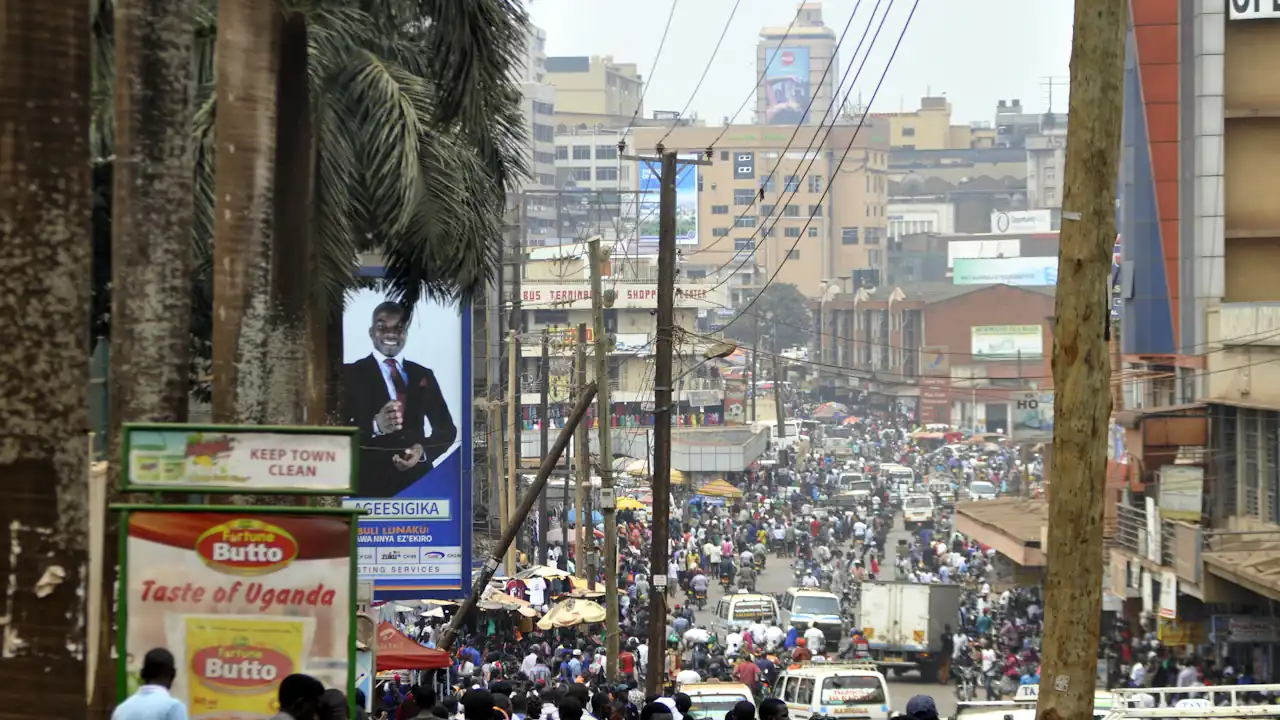
The findings place Uganda in company defined by rapid urban growth, limited regulatory capacity, and heavy dependence on biomass fuels. In Kampala, vehicle emissions, road dust and open waste burning are the principal sources of fine particulate matter, compounded by the widespread use of charcoal and firewood for cooking in densely populated areas.
PM2.5 particles, fine enough to penetrate the lungs and enter the bloodstream, are linked to respiratory and cardiovascular disease as well as cancer. At Uganda’s recorded levels, the public health implications are substantial.
The broader picture across Africa is no less troubling. The report estimates that around 330 million Sub-Saharan Africans live in areas where PM2.5 concentrations exceed 35 µg/m³, a threshold the WHO regards as well beyond safe levels. Across the continent, Rwanda ranked fifteenth globally at 34.5 µg/m³ and the DRC fifth at 50.2 µg/m³, underscoring how concentrated the burden remains in the region.
Globally, just 14 per cent of cities met the WHO’s recommended annual PM2.5 limit in 2025, down from 17 per cent in 2024. Only 13 countries and territories met the standard outright, most of them in Latin America and Oceania.
The data gap behind these figures deserves as much attention as the figures themselves. Africa accounts for roughly 1 per cent of the monitoring stations that fed into this year’s report, a coverage deficit that almost certainly means pollution in Uganda and its neighbours is underreported rather than overstated. The problem was sharpened in March 2025, when the United States withdrew air quality reporting from its embassies and consulates worldwide, removing what had been, for many cities in developing countries, their only reliable independent data source.
Without consistent, localised monitoring, policymakers face real constraints in designing effective interventions, let alone enforcing them. Uganda’s monitoring infrastructure is still very limited, and the lack of data is more than just a technical inconvenience; it is a policy failure in itself, allowing the problem to remain diffuse and difficult to address.
The report adds pressure to long-standing policy discussions in Uganda around vehicle emissions standards, cleaner cooking fuels and alternatives to biomass. Progress on all three has been uneven, and enforcement limited. The IQAir data suggests that, without sustained action and a serious investment in monitoring capacity, air pollution will continue to worsen alongside urbanisation, with consequences for public health and, over time, economic productivity.