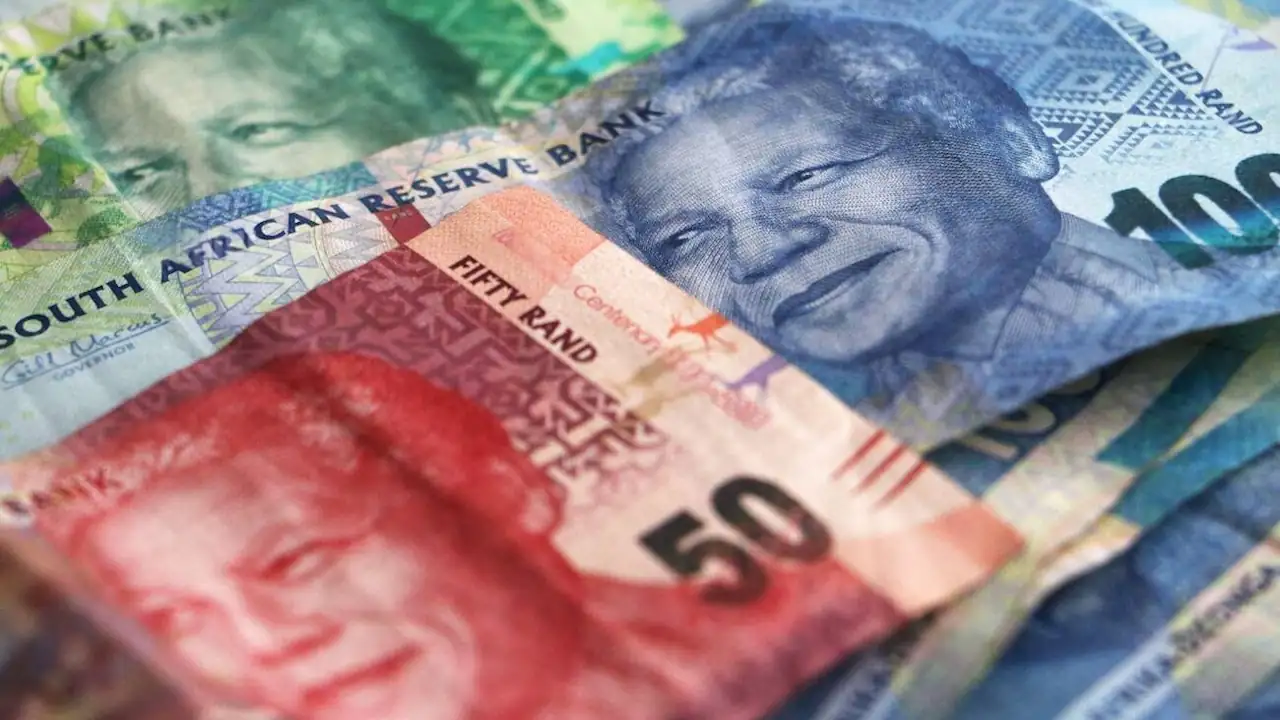


Over the past two decades, an increasing number of African countries have turned to international capital markets to meet their development financing needs. For instance, Kenya and Benin collectively raised $2.5bn through bond issuances in the first half of 2025. The proceeds were used to repay maturing bonds. This means that new bonds with unfavourable terms are being issued to repay previous lenders.
Yet African bonds are substantially mispriced, resulting in excessively high yields that are not justified by fundamentals – based on economic, fiscal and institutional strengths. Mispricing occurs when a country has high economic growth, stable institutions that support government policy implementation, rule of law and accountability, yet its bonds trade at higher yields than those of its peers. In other words, there will be every reason for investors to trust that the country will repay what it owes, but they still expect a higher return. This is happening because of lack of information and biases perpetuated by global entities that are facilitating bond sells in Africa.
Although Côte d’Ivoire and Senegal have strong growth rates of between 5 per cent and 6.5 per cent, they face high bond yields of between 7.8 per cent and 8.2 per cent. By contrast, Namibia and Morocco have growth rates of around 3% and bond yields of approximately 6 per cent.
This mispricing places a significant burden on already limited public budgets in terms of debt servicing.
At the same time, African countries are facing a puzzling paradox: although they are paying more for the debt they are raising, demand for these bonds is much higher than supply. All bond issuances in Africa are oversubscribed by over five times. This has only ever been the case in Africa. It is puzzling why governments are not leveraging the high demand to bargain for lower interest rates.
Based on my expertise in bond pricing modelling, I believe that the mispricing of Eurobonds in Africa – debt instruments issued by a country in a currency different from its own – is not a market anomaly. Rather, it indicates internal capacity failures in African countries, structural market biases, and an inadequate grasp of the intricate workings of global debt markets.
African governments should use the oversubscription of Eurobonds to their advantage, rather than missing out on opportunities. African countries can transition from being price takers to price negotiators. They should be able to reduce their debt costs and free up resources for development.
However, to achieve this, African countries must address the power imbalance in the markets.
They need to invest in bond pricing expertise to strengthen their negotiating position.
The false success signal of oversubscription
There are several reasons why African bonds remain mispriced at a higher interest despite the oversubscriptions.
Firstly, there is a lack of technical expertise in primary bond issuance in the debt management offices of most African governments. Very few have intelligence systems for gathering information on financial markets or formal investor relations programmes. They also lack in-house quantitative analysts and pricing specialists who can engage with investment banks on an equal footing during roadshows and negotiations.
As a result, the debt management offices are unable to engage confidently and critically with financial intermediaries, challenging assumptions, simulating pricing scenarios, and conducting their own comparative market analysis.
Following an initial public offering, most governments do not engage with holders of their bonds on the secondary market. Nor do they monitor bond performance after issuance. This lack of interest in the secondary market creates a feedback loop where poor market intelligence contributes to high coupons on new issuances.
Secondly, advanced economies engage investors regularly through briefings, roadshows and timely reports. Communication by African governments is often ad hoc and usually limited to the period around a new bond issuance.
This prevents investors from forming informed, long-term views. It leads to a default risk premium in pricing.
Thirdly, debt issuance by African governments is often politically driven rather than strategically timed. Often this leads to rushed or ill-prepared entries.
Sometimes this happens when the cost of debt is rising globally, close to election cycles or when governments are facing a financial crisis caused by falling reserves.
Fourthly, African sovereigns often approach the Eurobond market with weak negotiating power. They rely heavily on a small pool of Western investment banks to provide technical advice on bond issuance. These banks tend to prioritise their own global investment client networks. Their incentives are not aligned with achieving the lowest possible yield for the issuers.
African issuers often accept the initial price guidance from their advisers and agree to high yields, even when demand is high. Even when demand could support a lower yield, African issuers fail to negotiate a lower price. Issuing syndicates have no incentive to push for optimal pricing as they receive transaction-based fees.
The role of bond-issuing syndicates is a major factor in mispricing. In bond issuance, a syndicate is a group of financial institutions that structures the bond and its price, markets it (also known as ‘bookbuilding’), underwrites the unsold portion of the bond, sells it to its investors and ensures compliance and documentation. These syndicates set coupon rates higher than necessary as a conservative hedge against perceived investor scepticism.
Rather than being active price-setters, African governments have become passive participants. Despite growing regional capacity and distribution networks, African-based bond syndicates are systematically bypassed. Bond issues are also allocated to offshore buyers, marginalising local institutional investors.
Breaking the cycle of mispricing
To correct the systemic mispricing of Eurobonds and reduce debt servicing costs, African countries must implement reforms.
Firstly, governments should invest in debt management capacity.
Secondly, they must actively monitor the secondary market to identify opportunities, such as bond buybacks and exchanges, that could improve the debt profile. Thirdly, future issuance terms and investor communication strategies should be informed by real-time analytics on bond trading performance.
Thirdly, governments must establish institutional routines for submitting data and proactively engage with investors and rating agencies. This will challenge and influence risk assumptions. Investors require consistent assurances, particularly regarding the ability to exit positions easily.
Fourthly, African countries need to maintain and monitor up-to-date benchmarks from comparable peers. Without accurate comparisons, it is difficult to ascertain whether the pricing of proposed bonds by syndicates is fair and accurate. They must stop relying solely on recommendations from investment banks.
Lastly, African governments should prioritise allocating funds to African institutional investors, involve at least one African-based syndicate member, and promote regional arrangements with international banks to ensure equitable participation and knowledge transfer.
Misheck Mutize, Post Doctoral Researcher, Graduate School of Business (GSB), University of Cape Town
This article is republished from The Conversation under a Creative Commons licence. Read the original article.