

A measure of business conditions in Uganda’s private sector pulled back to its lowest level in four months, although it remained in expansion territory.
The Stanbic Bank Uganda purchasing managers’ index slipped to 53.6 in July from 55.6 the previous month, indicating the second consecutive decline in companies’ activity, according to S&P Global data. That kept the reading well above the 50-point threshold that separates expansion from contraction.
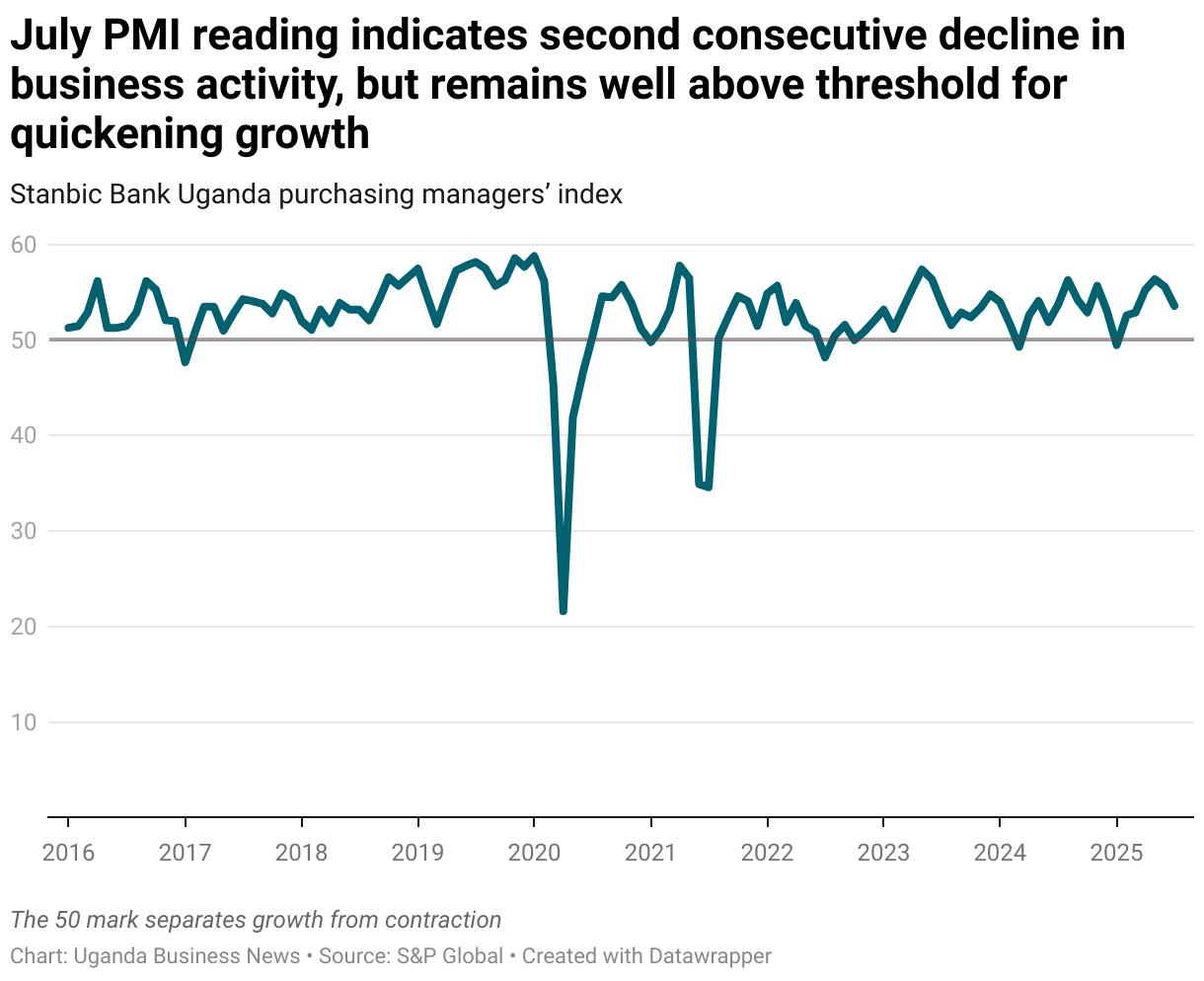
Companies reported robust new sales and an increase in output across all monitored sectors, which drove a rise in hiring and growth in inventory levels, the survey found.
It also noted “some strain on capacity” as firms experienced an increase in work backlogs for the first time in seven months. Christopher Legilisho, an economist at Stanbic Bank, said this was “likely due to strong new order demand”.
Inflationary pressures continued to rise, according to the survey, as higher wage bills and purchase costs for items and such as utilities, fuel, timber, and cereals went up, driving another hike in selling prices. Only construction companies reported a drop in selling prices, S&P said.
The PMI indices are closely watched by policymakers and investors as they provide insight into the business environment and are an early indicator of the economy’s future direction. This is because they are based on responses to questions about current business conditions, including new orders, sector production, supplier deliveries, company inventories, and employment figures.