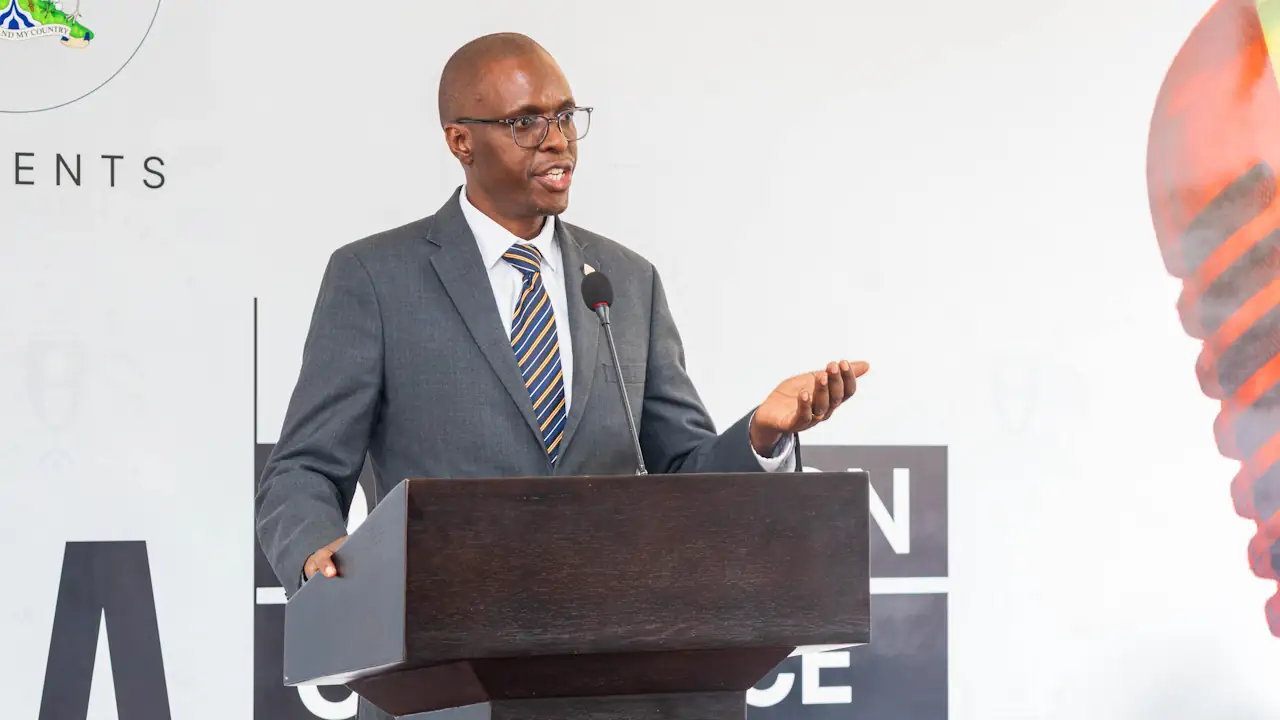
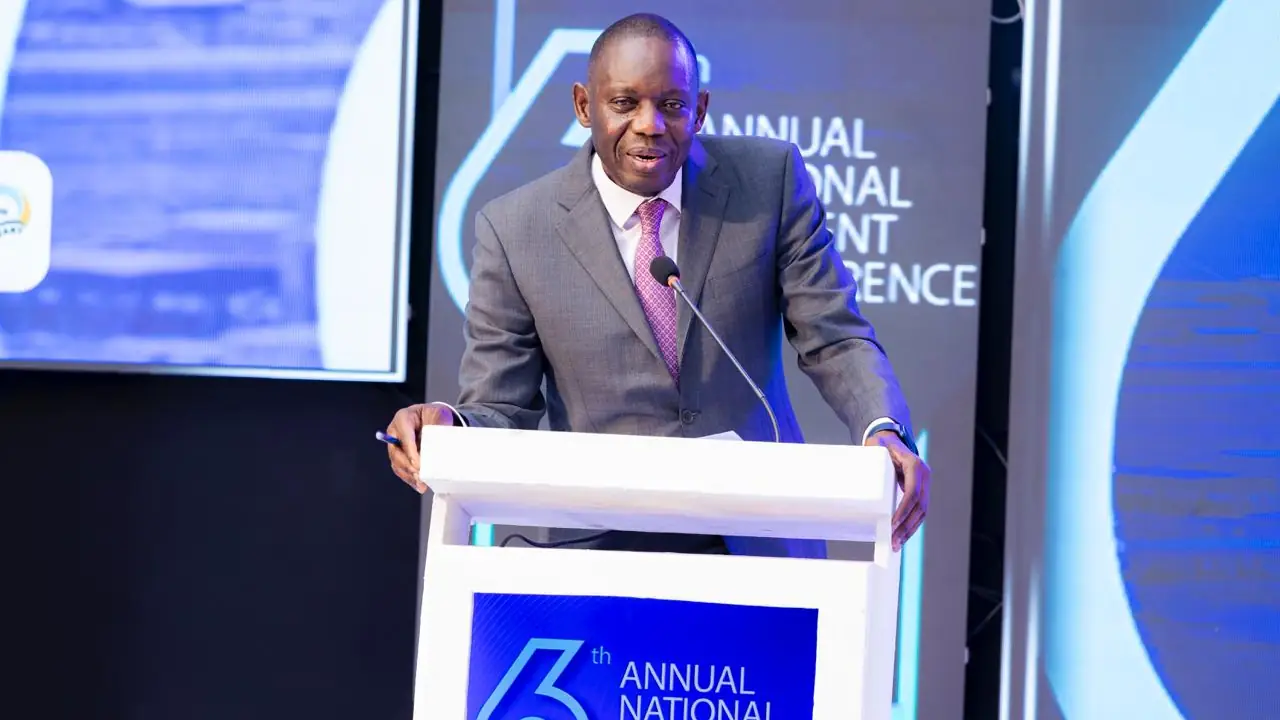

Keynote speech of Michael Atingi-Ego, Governor, Bank of Uganda – as prepared for delivery
6th Annual National Content Conference, 3 December 2025
Theme: “Beyond the Drill: Cultivating a Legacy of Empowered Nationals and Enterprises in Uganda’s Oil Age”
Honourable ministers, permanent secretaries, leaders of industry, distinguished participants, and fellow Ugandans, good morning to you all.
We stand at a defining moment in Uganda’s economic history. The theme of this conference, “Beyond the Drill: Cultivating a Legacy of Empowered Nationals and Enterprises in Uganda’s Oil Age”, is not just a title; it is a call to action. It challenges us to look beyond the immediate gains of extraction and to commit to a future where oil becomes a catalyst for inclusive, sustainable, and diversified growth.
1.0 The Paradox of Plenty: Turning resource wealth into national wealth
History teaches us that natural resource wealth is neither a blessing nor a curse in itself. The difference lies in governance, institutions, and foresight. Uganda is at this crossroads today.
Our Tenfold Growth Strategy, which aims to expand the economy from $50bn to $500bn by 2040, is anchored in four transformative pillars known as ATMS:
- Agro-industrialisation
- Tourism
- Mineral-based industrial development (including oil and gas)
- Science, technology, and innovation.
These pillars are not isolated initiatives; they are interconnected engines designed to promote inclusive, sustainable, and diversified growth. Similarly, the oil and gas industry is not an isolated project, but rather the driving force behind this transformation.
However, as economists such as Paul Collier and Joseph Stiglitz have emphasised, the real challenge lies in converting extracted resources into productive assets. The $11bn already invested in Uganda’s petroleum sector is more than just capital; it is laying the groundwork for the construction of roads, industrial parks and logistics hubs that will support our economy long after the oil has been depleted.
But let us be clear: barrels do not build nations. The true measure of success will be whether this oil age leaves behind empowered Ugandan firms, skilled workers, and resilient communities, or merely infrastructure without inclusion.
2.0 The Role of the Bank of Uganda: Guardian of stability and steward of posterity
The Bank of Uganda’s mandate, “to promote price stability and a sound financial system in support of socio-economic transformation”, is not passive. Rather, it is the cornerstone upon which Uganda’s economic transformation must be built.
Price stability is the foundation of confidence, investment and long-term planning. Our commitment to achieving the inflation target of an average annual core inflation rate of 5 per cent within the medium term (two to three years ahead) is about more than just a technical objective.
It is a promise to every Ugandan that their savings, wages, and investments will maintain their value and that our economy will withstand external and domestic shocks.
Should oil revenues exert strong appreciation pressures on the nominal shilling exchange rate, the Bank of Uganda will act decisively to ensure that inflation remains lower than the average of our trading partners. This will preserve Uganda’s competitiveness in real terms.
Together with the implementation of the ATMS, these measures will safeguard the economy against the potential ‘Dutch disease’ effects of oil revenues, ensuring that the wealth generated from natural resources leads to sustainable growth rather than instability.
Our task is clear: to ensure that Uganda’s oil and gas sector becomes a springboard for prosperity, not a detour from it.
The Bank of Uganda has a twofold role in this process: preserving macroeconomic stability and stewarding the Petroleum Revenue Investment Reserve (PRIR) for future generations.
2.1 Macroeconomic Stability: The invisible hand of progress
A stable currency, low inflation, and a resilient financial system are not abstract goals. They are the preconditions for every contract signed, every loan extended, and every enterprise launched. Our medium-term inflation target of 5 per cent is not arbitrary. It is the sweet spot — low enough to protect the purchasing power of households and businesses, yet flexible enough to accommodate the dynamics of a growing economy.
When we raised interest rates by 350 basis points to combat inflationary pressures from external shocks, we sent a clear signal: Uganda will not sacrifice stability for short-term gains. Our inflation-targeting framework, flexible exchange rate, and prudent reserve management are not just technical tools. They are the shock absorbers that will prevent oil revenues from destabilising our economy.
2.2 The Petroleum Revenue Investment Reserve: Saving today for tomorrow
The PRIR is not a savings account. It is a covenant with the future. The Public Finance Management Act ensures that oil revenues are not squandered but invested wisely, balancing today’s needs with tomorrow’s obligations. This is not just fiscal prudence, but also intergenerational equity.
Sovereign wealth funds must be managed with discipline and transparency. The PRIR will be no different. Its investments will be guided by one principle: converting temporary wealth into permanent assets.
3.0 National Content: From compliance to capability
National content is about more than just ticking boxes. It lies at the strategic heart of our oil and gas strategy. The National Local Content Policy is clear: Ugandan citizens and enterprises must be at the forefront of this sector.
However, let us move beyond rhetoric. Three shifts are essential:
- From participation in contracts to participation in capabilities: Ugandan firms should not only win contracts; they must upgrade their technology, management, and standards to compete globally. Every local content provision should be a stepping stone towards greater value addition
- From enclave projects to integrated corridors: Oil infrastructure should be planned as part of regional development corridors crowding in agriculture, manufacturing, and services. The Kabalega Industrial Park is a prime example of this, serving as a hub for both the oil industry and broader industrialisation
- From short-term spending to long-term assets: Oil revenues should be used to finance human capital, infrastructure, and institutions — assets that will endure long after the oil has been depleted.
This is how we transform finite resources into infinite possibilities.
4.0 The role of oil and gas in Uganda’s tenfold growth strategy
Ladies and gentlemen, our bold ambition to expand the Ugandan economy from $50 billion to $500 billion by 2040 is not just a vision; it is a deliberate, actionable roadmap.
It is anchored in four transformative pillars, known as ATMS: agro-industrialisation; tourism; mineral-based industrial development, including oil and gas; and science, technology and innovation. These pillars are not isolated initiatives; they are interconnected forces designed to drive inclusive, sustainable and diversified growth.
1. Oil and gas as a catalyst for non-oil growth
The discovery of commercial oil reserves is not an end in itself. Rather, it is a finite resource that must be harnessed to fuel infinite opportunities. Our oil and gas sector is uniquely positioned to:
- generate revenues that will be reinvested in the ATMS pillars, ensuring that the benefits of oil production continue beyond the production phase
- stimulate linkages across the economy, from agroindustrialisation to tourism, manufacturing, and technology
- accelerate the development of critical infrastructure, including energy, transport, and digital connectivity, which are critical enablers for all sectors.
The Petroleum Revenue Investment Reserve (PRIR), which is managed by the Bank of Uganda, is not just a savings fund. It is a strategic instrument designed to stimulate discussion on the allocation of investments, particularly in foreign currency reserves and high-impact non-oil sectors such as agriculture, tourism, minerals and technology. These allocations must prioritise socio-economic returns to ensure Uganda’s growth and prosperity long after the last barrel of oil is extracted.
2. Agro-industrialisation: From raw materials to high-value products, powered by oil and gas
Uganda’s agricultural sector employs over 70 per cent of the population, yet it only contributes 24 per cent to GDP (UBOS, 2023), a clear signal of untapped potential. The Tenfold Growth Strategy prioritises value addition, and the oil and gas sector can play a pivotal role in unlocking this potential by providing the infrastructure, energy, and financing needed to transform raw commodities into high-value products.
How oil and gas will drive agro-industrial growth
Oil and its byproducts are critical inputs for agro-industrialisation, serving as a source of hydrogen for ammonia-based fertilisers and as a feedstock for petrochemical processes. The Kabalega Industrial Park will integrate oil refining with diverse manufacturing, including:
- petrochemical and fertiliser plants (using gas feedstocks for polymer and ammonia production)
- agro-processing units for food, crops, and livestock products near Kabalega International Airport
- logistics and warehousing (distribution hubs, storage, and export infrastructure).
The byproducts of the Hoima Refinery (e.g., plastics for packaging and fertilisers for farms) will further reduce input costs for farmers and processors.
The Bank of Uganda will encourage the financing of these value chains through innovative instruments, such as blended finance, risk-sharing schemes, and the Agricultural Credit Facility, to ensure that smallholder farmers and agro-processors can access the capital they need to thrive.
3. Tourism: Beyond safaris to high-end experiences, fuelled by oil and gas
Tourism is Uganda’s second-largest source of foreign exchange, contributing $1.6bn annually, yet we capture only a fraction of its potential. The oil and gas sector is expected to supercharge tourism by funding infrastructure, creating new attractions, and positioning Uganda as a global leader in sustainable resource management.
How oil and gas will transform tourism
- Infrastructure for high-end tourism: The Kabalega International Airport, built to support oil logistics, could become a gateway for luxury tourism, reducing travel time to Murchison Falls, Queen Elizabeth, and Kidepo Valley National Parks. Oil-funded road upgrades (e.g. the Hoima-Butiaba-Wanseko Road) would improve access to tourism hotspots, cutting travel time by 40 per cent (UNRA, 2023)
- Albertine Graben oil and gas tourism circuit: Such a new tourism product could potentially showcase Uganda’s journey to commercial oil production, including:
- Eco-friendly oil operations (e.g. the Tilenga and Kingfisher projects)
- Cultural experiences in communities hosting oil operations, e.g. the Bunyoro Kingdom’s oil heritage
- Luxury lodges and conference facilities in Hoima and Buliisa targeting business travellers and high-spending tourists. This circuit could attract over 50,000 high-spending tourists annually, generating over $100 million in revenue by 2030 (Ministry of Tourism, Wildlife and Antiquities, 2023 – tourism projections).
- Energy for sustainable tourism: LPG from the Hoima Refinery could replace charcoal and firewood in hotels and lodges, reducing deforestation by 30 per cent and improving air quality (NEMA, 2023). Funded by oil revenues, solar-powered tourism sites would establish Uganda as a leader in green tourism.
To support this growth, the Bank of Uganda would encourage affordable financing for tourism enterprises, promote digital payments and ensure that our financial sector is equipped to handle the influx of international visitors.
4. Mineral-based Industrialisation: From extraction to innovation, anchored by oil and gas
Uganda is rich in gold, copper, cobalt, lithium and rare earth minerals, all of which are critical to the global green energy transition. Accelerating mineral-based industrialisation through the oil and gas sector would provide the necessary energy, infrastructure, and financing to transform raw minerals into high-value products.
How oil and gas will drive mineral development
- Sukulu Phosphate and Iron Ore Project: This project could reduce Uganda’s reliance on imported fertilisers and steel, saving $380mn annually (MEMD, 2023). The Hoima Refinery’s petrochemical plants could supply affordable inputs (e.g. sulphuric acid for copper refining, plastics for packaging), while EACOP’s transport network would facilitate the export of processed minerals to global markets
- Regional hub for battery minerals: Uganda could become a major supplier of cobalt, lithium, and graphite for electric vehicles and renewable energy storage systems. The Kabalega Industrial Park could house mineral processing plants that convert raw ores into battery materials, fertilisers, and construction materials, potentially adding $1bn to annual mineral earnings (Uganda Chamber of Mines, 2023)
- Petrochemical industry: The Hoima Refinery will produce plastics, fertilisers, and synthetic materials, feeding into agro-industrialisation, and manufacturing.
The Bank of Uganda is collaborating with various stakeholders, including the Uganda Bankers Association, development partners, the Uganda Development Bank (UDB), and private sector partners, to mitigate investment risks, particularly in mineral processing, to ensure that Ugandan enterprises lead this transformation.
5. Science, Technology and Innovation: The future of Uganda’s economy, catalysed by oil and gas
The fourth pillar — science, technology, and innovation (STI) — is the great equaliser. The oil and gas sector can accelerate its impact by providing the necessary funding, energy and infrastructure to drive Uganda’s knowledge economy.
How oil and gas can power STI growth
- Drive productivity gains across sectors, from precision agriculture (using oilfunded irrigation and agro-tech) to digital tourism (leveraging LPG from refineries for eco-lodges) and advanced manufacturing (supported by petrochemical inputs)
- Support a knowledge economy, including pharmaceuticals (using refinery by-products for drug manufacturing), biotechnology, and creative industries (film, music, and fashion), with oil revenues funding STI hubs such as the Kabalega Innovation Park
- Leverage Uganda’s young, tech-savvy population to create a digital workforce, with oil-backed financing for coding boot camps, tech incubators, and green energy start-ups.
The Bank of Uganda is championing financial inclusion for tech start-ups, promoting digital banking and ensuring that our ESG framework supports green and innovative enterprises, ranging from e-mobility to agritech.
5.0 The Financial Sector: Financing growth while ensuring sustainability
The financial sector has a dual role: financing the oil and gas sector while ensuring that this is done sustainably.
5.1 Access to Finance: Unlocking opportunities for local enterprises
Local enterprises face a financing gap. The Bank of Uganda and the Government, working with supervised financial institutions, are addressing this through:
- blended finance models (e.g., the Agricultural Credit Facility and the Small Business Recovery Fund)
- risk-sharing schemes to reduce the risk of lending to SMEs
- the Parish Development Model has already disbursed vital resources to over one million households.
In the oil sector, we will explore adapting these models to minimise dependence on conventional collateral, integrating nontraditional innovations such as block allocation. Similarly, it is important to think outside the box, exploring options such as using supply contracts as collateral and developing factoring solutions to mitigate the issue of delayed payments.
5.2 ESG and Sustainability: The new imperative
The Bank of Uganda is institutionalising ESG across the banking sector. Why? Because sustainability is a competitive advantage, not a constraint.
Our ESG Framework for the Banking Industry ensures that financial institutions integrate environmental, social, and governance risks into their operations. For the oil sector, this means:
- rigorous environmental safeguards for projects
- transparent community engagement to ensure shared prosperity
- zero tolerance for corruption—because governance is the foundation of trust.
This is not merely about compliance; it is about future‑proofing Uganda’s oil sector in a global landscape where both investors and consumers increasingly demand sustainability. Equally important is the pursuit of net-zero carbon emissions within banking operations. The principle is simple: for every shilling invested in a carbon-emitting sector, an equivalent amount should be invested in a carbon-absorbing sector.
This will ensure that the carbon-absorbing economy, largely driven by non-oil industries, endures long after Uganda’s oil and gas resources are depleted, thereby ensuring resilience and long-term prosperity.
6.0 A Call to Action: Forging our shared legacy
Ladies and gentlemen, the vision I have outlined is achievable, but only if we work together.
- To the government and parliament: strengthen the fiscal framework. Safeguard the Petroleum Fund. Invest in high-quality public infrastructure to unlock private initiative
- To the Petroleum Authority and industry operators: increase national content. Publish clear opportunity pipelines. Invest in supplier development and skills transfer
- To the financial sector: Innovate. Develop financial products tailored to local suppliers. Fully implement the ESG framework
- To Ugandan enterprises: Prepare. Invest in certifications, standards, and scale up. Form consortia. Don’t just compete locally, compete globally.
The Bank of Uganda will play its part by preserving stability, stewarding the PRIR, and fostering a resilient, inclusive, and sustainable financial system.
7.0 Conclusion: The legacy we choose
In closing, I would like to leave you with this thought: future generations will not remember us for the barrels we extracted. They will remember us for the choices we made — whether we turned this moment into a springboard for prosperity or allowed it to become a missed opportunity.
The ATMS pillars are our blueprint for ensuring the prosperity we create today endures for decades to come. The Bank of Uganda is committed to ensuring that Uganda’s oil age becomes a story of transformation, not extraction; of empowerment, not dependency; of legacy, not squandering.
Let us choose wisely. Let us act boldly. And let us build a Uganda in which every citizen can share in the promise of this new era.
Thank you. God bless!