
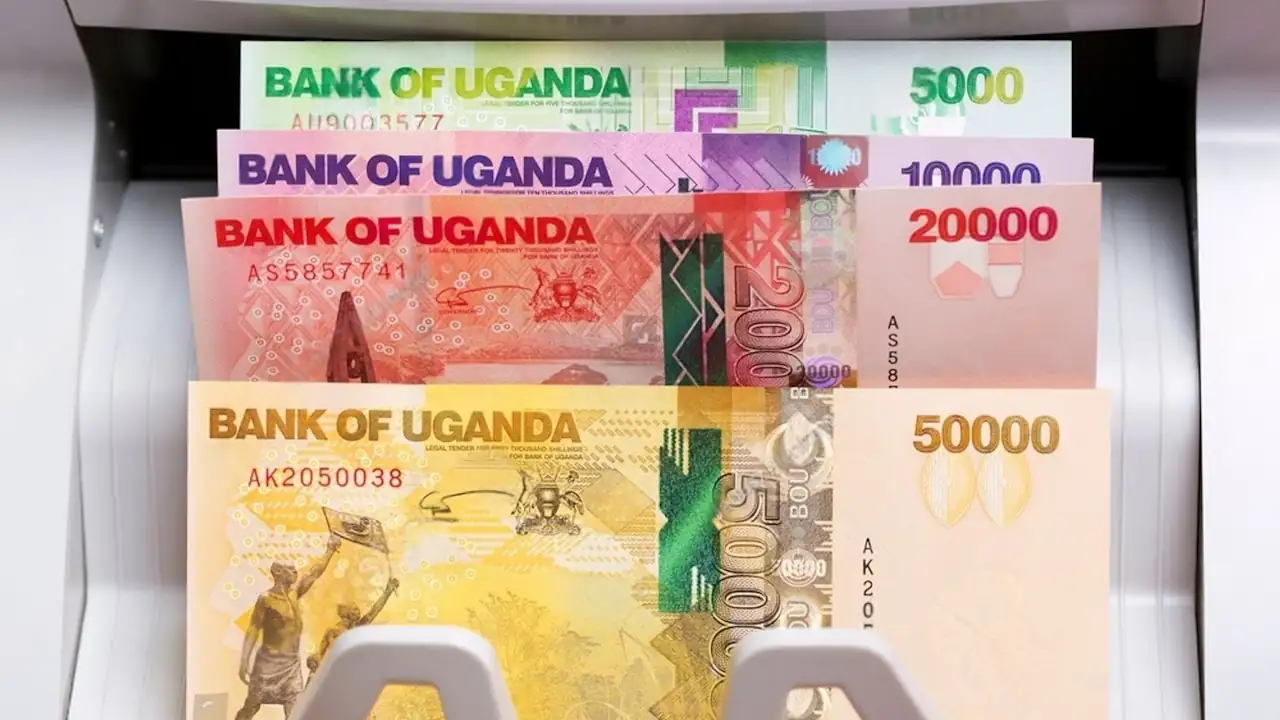
The Bank of Uganda’s treasury bond auction on 18 February drew substantially stronger demand than the government had anticipated, with yields on the three- and ten-year papers falling to their lowest levels since early 2024 — a sign that investor confidence in Ugandan sovereign debt has recovered considerably from the elevated-rate environment of the past two years.
The government offered Shs990bn across three re-opening bonds — a three-year, a ten-year, and a 20-year — and received Shs2.37tn in total bids, an oversubscription of roughly 2.4 times. Bid-to-cover ratios of 2.685, 2.350, and 2.508 on the three respective tenors all cleared the 2.0 threshold typically regarded by analysts as evidence of healthy market appetite.
The clearest signal of shifting sentiment lay in the yield-versus-coupon spreads. The three-year bond, which carries a coupon of 15.550 per cent, cleared at a yield of just 13.295 per cent — meaning investors accepted a price of Shs106.233 per Shs100 of face value, a significant premium. The last time the three-year tenor cleared at a comparable yield was in early 2024, when it priced at 14.999 per cent in March and 13.200 per cent in January. Before that, yields on the three-year bond had briefly touched the low teens in 2021 and early 2022, during a period of loose monetary conditions, before surging to a recent peak of around 16.550 per cent in January 2025.
The 10-year paper told a similar story: a coupon of 16.250 per cent but a clearing yield of 14.500 per cent, with investors paying Shs112.978 per Shs100. That represents a meaningful compression from the 17.100 per cent at which the same tenor priced in January 2025 and the 17.500 per cent recorded as recently as May 2025 — the highest 10-year yields since the 2015–16 period, when a sharp depreciation in the shilling pushed borrowing costs sharply higher across the curve.
The 20-year bond was the modest outlier: its 15.000 per cent coupon priced at a yield of 15.490 per cent, slightly above par, indicating that investors demanded a small discount to hold paper of that duration. The long end of the curve has consistently attracted less enthusiasm in Uganda’s market, and the 20-year bond’s bid-to-cover ratio of 2.508 — while solid — reflects the additional uncertainty that investors associate with locking capital away for almost two decades in a frontier market.
Non-competitive bids on the 10-year reached Shs31bn, the largest such allocation across the three tenors, suggesting that smaller institutional and retail participants were content to accept whatever yield the market set — a secondary indicator of broad-based demand rather than positioning concentrated among a handful of primary dealers.
Read: Why government bonds are a good investment
Last week’s results extend a trend that began taking shape in the second half of 2025, when yields — having peaked in May and June — started to ease across most tenors. The three-year, for instance, was priced at 15.700 per cent in September 2025 and 16.000 per cent in October, before declining to 15.900 per cent in January 2026 and now 13.295 per cent. The pace of the move in the most recent auction is notable: a drop of more than 260 basis points on the three-year bond within a single auction cycle is not routine.
The data, spanning more than two decades of Ugandan bond auctions, puts the current environment in sharper relief. While yields of 13–15 per cent across short and medium tenors are not exceptional by historical standards — the market briefly traded above 10 per cent on the two-year bond in 2021 and 2022 — last week’s levels represent a substantial retreat from the elevated borrowing costs Uganda faced through much of 2024 and 2025, when fiscal pressures and a tighter monetary stance pushed yields well above 16 per cent across most tenors.
For the government, this downward trend is welcome. Sustained demand at sub-coupon yields means Uganda can refinance maturing obligations at progressively lower rates, which eases the pressure of a debt-service burden that has consumed an increasingly large proportion of the national budget in recent years. Whether the trend holds will depend in part on the Bank of Uganda’s monetary policy stance, the shilling’s trajectory, and the appetite of East African investors for frontier-market paper — factors that upcoming auctions will help to clarify.