
Uganda Clays Limited returned to profit in 2025, reversing two consecutive years of losses as lower production costs and steadier plant operations lifted margins despite a heavier financing burden.
The government-controlled building materials manufacturer reported a net profit of Shs142mn ($39,453) for the year to December, compared with a loss of Shs4.9bn in 2024. The recovery follows a period marked by operational disruptions and high costs, which affected performance.
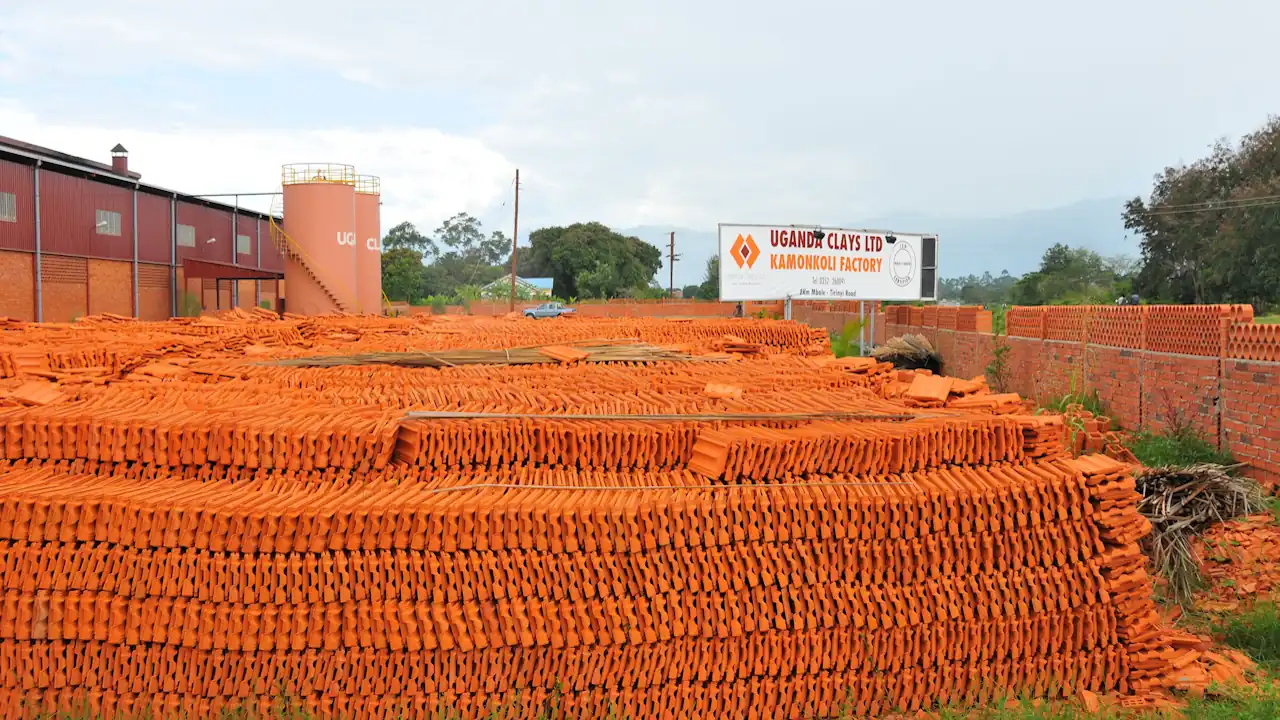
Revenue rose 10 per cent to Shs34.8bn, reflecting improved production stability at its Kajjansi and Kamonkoli plants and a corresponding increase in sales volumes. The company had previously flagged disruptions at both facilities in the first half of the year, which constrained output and revenues.
The more notable shift came on costs. Cost of sales fell 15 per cent to Shs19.8bn, driving an 81 per cent increase in gross profit to Shs15bn. Gross margin expanded to roughly 43 per cent, from 26 per cent a year earlier, signalling a sharp improvement in production efficiency.
Operating expenses also declined, albeit more modestly, falling 8 per cent to Shs10.5bn. As a result, the company posted an operating profit of Shs4.6bn, compared with an operating loss of Shs2.8bn in 2024.
The turnaround at the operating level reflects a shift from the prior year, when higher revenues were offset by persistent cost pressures. In 2024, the company cited high direct and indirect costs as the principal driver of its losses, despite gains in output.
Finance costs, however, continued to weigh on earnings. These rose to Shs3.9bn in 2025 from Shs3.2bn a year earlier, largely due to interest obligations on existing borrowings, including restructured debt owed to the National Social Security Fund.
The increase limited the extent of the recovery at the bottom line, leaving the company with only a marginal profit before tax of Shs666mn. After tax, the surplus narrowed further [to Shs142mn], underscoring the extent to which financing costs continue to constrain profitability.
Cash flow performance was more mixed. Net cash generated from operations fell sharply to Shs1.5bn from Shs8.1bn in 2024, when working capital movements had boosted inflows. The decline suggests that the earnings recovery has yet to translate fully into stronger underlying cash generation.
On the balance sheet, total assets rose to Shs80.6bn from Shs76.4bn, reflecting continued investment in plant and machinery. Non-current liabilities increased significantly to Shs28.0bn, up from Shs19.1bn, pointing to a greater reliance on long-term borrowing.
Equity edged down slightly to Shs38.0bn, largely due to reserve movements, although the return to profitability halted the erosion seen in the previous two years.
The company said it would not pay a dividend for the year, opting instead to preserve cash to support its recovery and ongoing capital expenditure programme.
The improvement in performance follows continued investment in capacity expansion. In 2024, the company had already paid for a new plant from Italy, with most of the equipment shipped, as part of efforts to raise efficiency and output.
Management said the 2025 recovery was driven by “improved operational stability”, higher production volumes and tighter cost control. The focus now shifts to sustaining those gains.
Key priorities include increasing capacity utilisation, expanding distribution and further improving operational efficiency, including through automation. These measures are intended to support revenue growth while maintaining margins.
The outlook remains contingent on execution. While the company has demonstrated that it can restore profitability through cost discipline and improved plant performance, its earnings remain sensitive to financing costs and broader demand conditions in the construction sector.
For now, the return to profit marks a break with a period of sustained losses. Whether this signals a durable recovery will depend on the company’s ability to convert operational gains into consistent cash flow and manage its debt burden more effectively.
($1 = Shs3,599.1, 2025 period average)