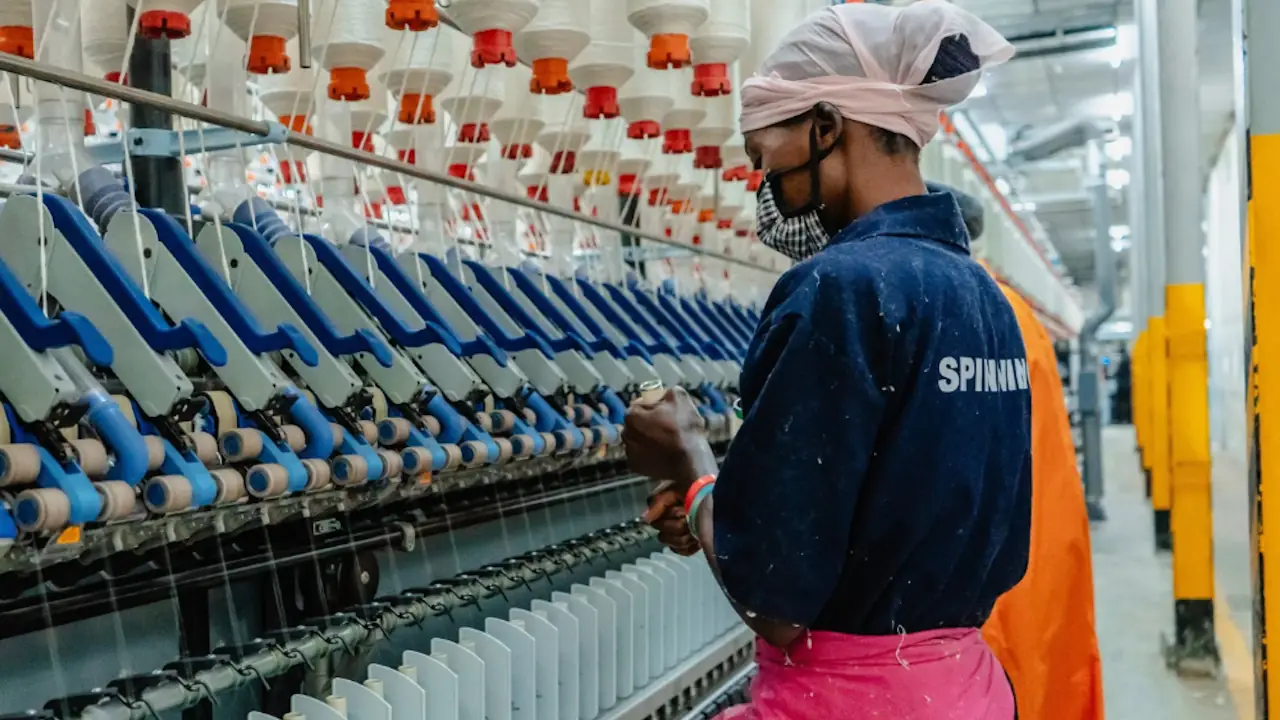

Fine Spinners Uganda is investing a further $5mn (Shs19.7bn) in new textile machinery, taking its total spending on machinery at the Kampala mill to $35mn (Shs137.7bn), as the company pursues export growth beyond its current markets in Europe and East Africa.
The company, one of only two vertically integrated textile mills in Uganda, announced the investment in a statement on 17 September. It expects the new equipment to lift mill capacity by 30 to 40 per cent, adding 30 to 40 tonnes of yarn and between 150,000 and 200,000 garments a month once fully commissioned.
Sav Bedi, chief executive, told Uganda Business News the investment was funded through equity and retained earnings rather than debt. Most of the machinery has already been delivered and is running pre-production trials, he said; a new weaving plant is on site and due to begin commissioning in October.
The equipment comes from a spread of specialist suppliers: ring frames and autoconers from Saurer and Rieter of Switzerland, looms from Picanol of Belgium, warping machines from Prashant of India, knitting machines from Pai Lung of Taiwan, dyeing machines from Fongs of Hong Kong, padders and slitters from Bianco of Italy, and a stenter from Brückner of Germany.
Fine Spinners employs 1,600 people directly at its Bugolobi site and expects the new lines to add 150 to 200 jobs. It sources cotton from 15,000 smallholder farmers under direct contract, buying between 7,000 and 10,000 bales a year.
“This investment demonstrates our confidence in the future of textile manufacturing in Africa and our commitment to building a world-class manufacturing operation,” said Jaswinder Bedi, the company’s chairman, in the statement. “By investing in advanced technology and expanding our production capabilities, we are positioning Fine Spinners to serve more customers across Africa while delivering greater value through local manufacturing.”
Fine Spinners currently exports to Germany, Denmark, Spain, Gabon, South Sudan and Rwanda, alongside sales in Uganda and Kenya. Sav Bedi said the new capacity was intended to open a market in Japan and deepen the company’s presence in Europe. It also plans to supply fabric to large American brands that manufacture garments in Kenya’s export processing zones using fabric imported from China and India, a route into the US market that does not depend on direct exports.
That route matters because Uganda has been outside the African Growth and Opportunity Act, the United States’ duty-free trade programme, since January 2024, when it was removed over the Anti-Homosexuality Act. The US Trade Representative’s June 2026 review again left Uganda off the list of beneficiary countries. Sav Bedi confirmed the exclusion continues to limit direct access to the US market.

The scale of that loss became clear in December 2025, when Parliament approved a Shs6.1bn government purchase of 540,000 Fine Spinners T-shirts that had been made for the US market. Patrick Isiagi, chairperson of Parliament’s budget committee, told MPs the company had “invested heavily” in the shirts before losing what he called “the huge USA market”. The shirts are being sold domestically through the Uganda Tailors Association, which is to repay government over 18 to 24 months, Parliament Watch reported.
Most of Uganda’s cotton still leaves the country unprocessed. About 93 per cent of the 2023/24 crop was exported as raw lint, with only 7 per cent processed domestically, according to sector data reported by allAfrica in August. Uganda has just two vertically integrated mills capable of turning that cotton into finished garments.
($1 = Shs3,935.24, 17 September rate)