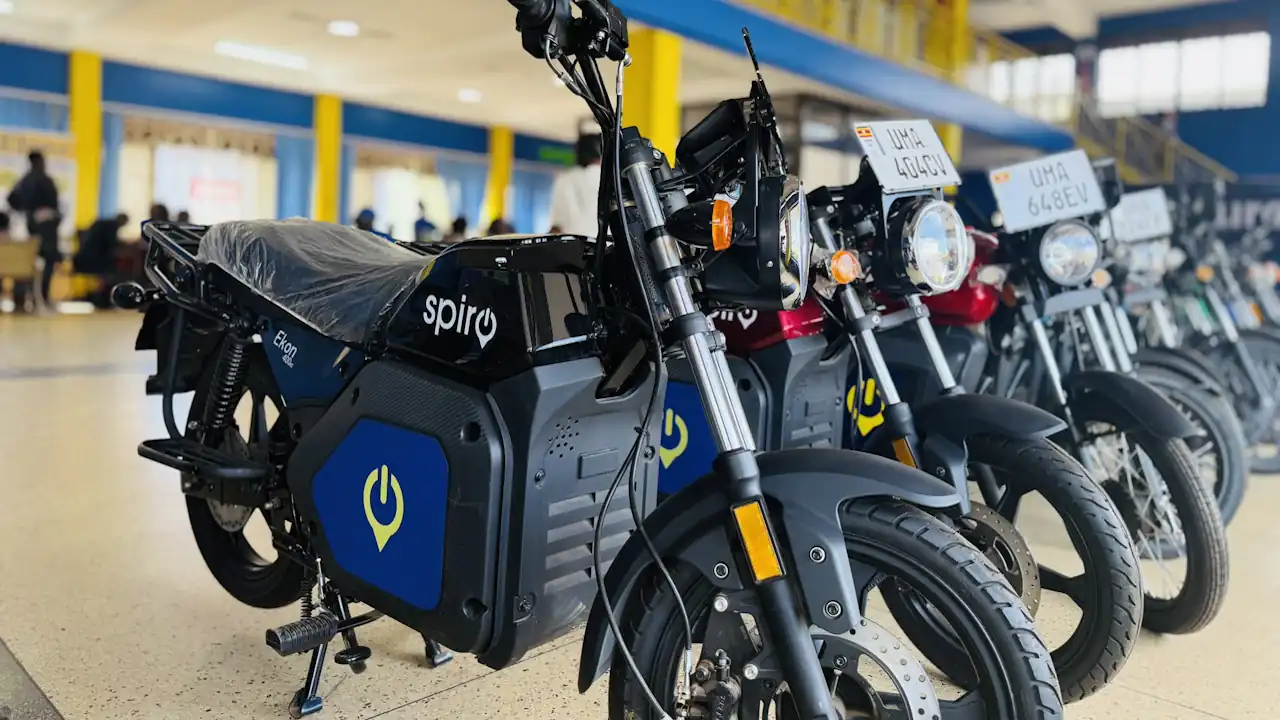

Spiro, the African electric motorcycle maker, has secured $18mn (Shs70.6bn) in new debt to expand its electric motorcycle fleets and battery-swapping network in Uganda and Rwanda, doubling to $36mn the commitment of its lender, Africa Go Green, a climate fund managed by Cygnum Capital.
Africa Go Green made its first $18mn commitment in December 2025, alongside $7mn from Nithio. Spiro has more than 33,000 electric motorcycles in Uganda and more than 40,000 in Rwanda, Kaushik Burman, its Mobility CEO, told Zag Daily. The two markets account for more than 73,000 of a fleet Spiro puts at more than 135,000 across seven African countries.
Burman said the decision to focus the money on Uganda and Rwanda, which with Kenya are Spiro’s best-performing markets, was “highly led by the number of bikes on the road, the growth in battery swapping infrastructure and the policies driving electric mobility” in both.
Spiro was founded in 2022 by Gagan Gupta, an Indian entrepreneur whose Equitane investment group has backed the company. It launched in Uganda in July 2024, at an event in Kyankwanzi with President Yoweri Museveni, with about 500 motorcycles in Kampala, and its Ugandan fleet passed 12,000 in October 2025. The company owns manufacturing plants in Kenya, Rwanda and Uganda, according to a June Bloomberg report.
Afreximbank’s Fund for Export Development in Africa led a $100mn equity round in October 2025, and Impact Fund Denmark and Equitane backed a $215mn round in June. NewTrails Capital, a Chinese growth fund, added $55mn, taking the June total to $270mn. Spiro also raised $50mn of debt earlier this year, and Gupta told Bloomberg the company was nearing a $1bn valuation.
Spiro sells and leases electric motorcycles to delivery riders, fleet operators and logistics companies. Riders on a battery subscription swap depleted batteries for charged ones at its stations; the company reports more than 50mn swaps across its markets. In March 2025, Airtel Money announced a scheme to finance a Shs5mn Spiro motorcycle for customers with a positive transaction history and a Shs600,000 deposit.
The money will pay for more “mega” swap stations, each holding 200 to 800 batteries. Spiro has 10 in Rwanda and one in Kenya, and Burman said the first in Uganda would follow. He said Spiro was “incorporating solar into our battery swapping stations in case there’s grid unreliability in one of these countries”.
A World Bank diagnostic study of Uganda’s e-mobility market prepared for the ministry of energy named access to affordable financing as the “primary remaining barrier” to electrifying boda bodas. It proposed a dedicated credit line through the Uganda Energy Credit Capitalisation Company and listed Spiro among operators with “commercially viable” battery-swapping models.
Africa Go Green’s website says its loans run for a flexible tenor of up to 10 years, but the announcement did not give the terms of this debt. Gupta told Bloomberg that Spiro would enter Malawi, Mali and Ethiopia, while Zag Daily reported plans for the Democratic Republic of Congo, Ghana and Mali.
Laurène Aigrain, managing director of Africa Go Green, said the increase reflected “strong progress” and “continued confidence” since the fund’s first investment. “By making electric mobility solutions more accessible and affordable, Spiro is tackling two critical challenges at once: cutting transport emissions and giving riders a smarter, more cost-effective way to move,” she said.
($1 = Shs3,920, Bank of Uganda mid-rate, 24 September)