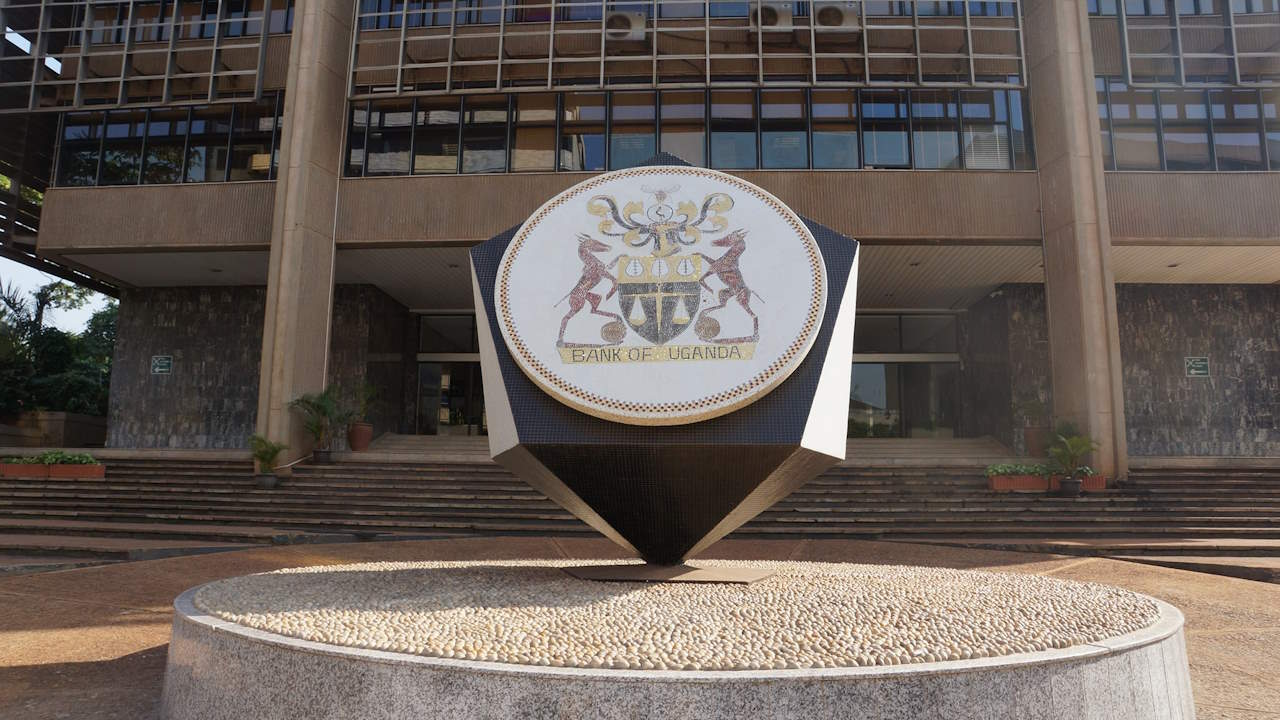
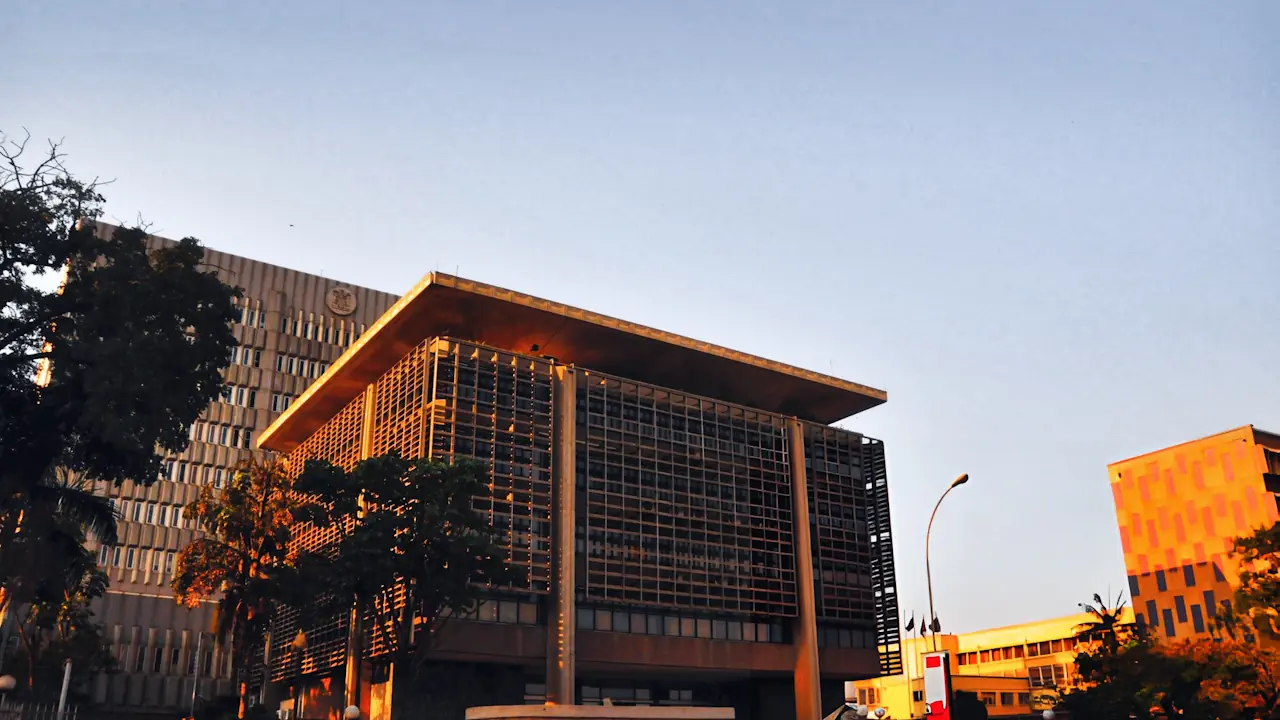

The Bank of Uganda’s surplus doubled in the year to June, but the rise came from the release of provisions against government debt and a swing in currency valuations rather than stronger underlying earnings.
The central bank’s net surplus, its income less expenses and in effect its profit, was Shs1.3tn ($365.5mn) for the year ended 30 June, against Shs658.9bn a year earlier, according to its annual report. Most of its income is interest on government securities and on the foreign-exchange reserves it manages.
Provisions for expected credit losses swung from a charge of Shs226.1bn a year earlier to a release of Shs106bn ($29.4mn). Nearly all of the release related to loans and advances to the government.
Net loans and advances to the government fell to Shs49mn from Shs1.8tn. The notes to the accounts show a government capital account of about that size at nil at the year-end, but do not say how the balance was cleared.
Unrealised currency gains of Shs238.6bn ($66.2mn) added to the surplus, against losses of Shs211.6bn a year earlier. They arise when a weaker shilling raises the local-currency value of the bank’s foreign-currency assets, and the bank holds them in a translation reserve rather than treating them as distributable.
Together the two swings came to Shs782.3bn, more than the Shs659.6bn rise in the surplus.
Strip out both and the surplus fell 11.2 per cent, according to our calculations. The bank does not publish that measure.
Net interest income rose by about a tenth, but realised currency losses climbed to Shs93.5bn from Shs3bn, and net non-interest income fell by two-fifths as gains on financial assets held at fair value shrank.
On the bank’s own measure, distributable surplus deducts only the unrealised currency gains. It rose 24 per cent to Shs1.1tn and includes the provision release. The directors do not recommend a dividend to the government, as in the previous year, and the statement in the accounts gives no reason.
Most of the 57 central banks in a 2016 European Central Bank occasional paper, 42 of them, do not distribute unrealised gains. An IMF chapter by Kenneth Sullivan says unrealised profit “may not be backed by the liquid assets required to enable its distribution without eroding the bank’s liquidity and solvency”.
How profits are shared is set by the Bank of Uganda Act of 1993. After the bank has made good its capital and general reserve and allowed for expenses, bad-debt provisions and other contingencies, “any net profits or losses from the Bank’s operations shall be shared between the Bank and the Government in respective proportions of twenty-five percent and seventy-five percent”, section 16(1) of the Act says.
Under section 16(3), the board may also pay the whole net profit into the Consolidated Fund once the general reserve is “twice or more than the amount of the paid-up capital of the Bank”. The general reserve of Shs399.3bn is almost 20 times paid-up capital of Shs20bn.
Core capital rose 47.4 per cent to Shs3.4tn ($922.5mn). The bank calculates it from the revenue reserve, the general reserve, share capital and recapitalisation securities.
All of the increase came from the revenue reserve, which was a deficit of Shs867.6bn two years ago and stood at Shs1.1tn at the end of June. The reserve takes the surplus after unrealised currency gains are moved to the translation reserve, so the provision release counts towards capital.
Recapitalisation securities, treasury bonds the government issued to recapitalise the bank, account for 55 per cent of core capital.
($1 = Shs3,607.5, the Bank of Uganda’s 2025/26 average, except core capital at the Shs3,665.1 closing rate)