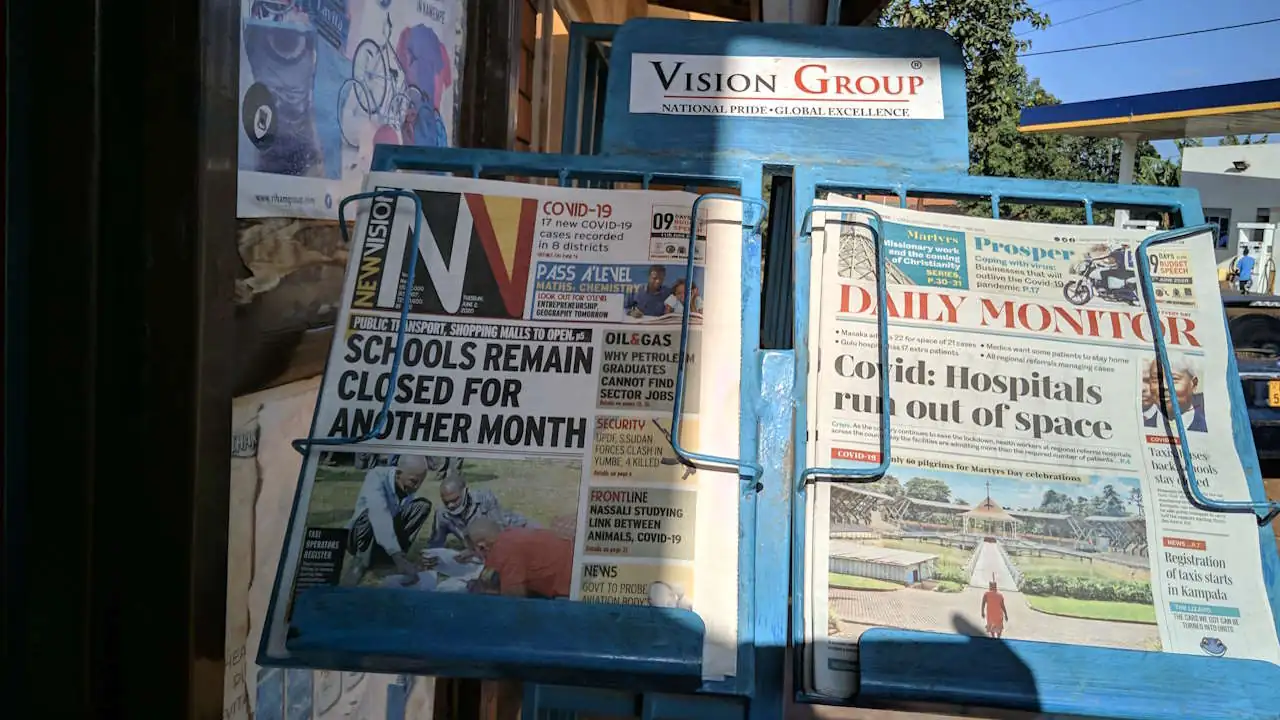

New Vision Printing and Publishing Company lost Shs4bn in the year to June, its fourth consecutive annual loss, according to accounts posted on the Uganda Securities Exchange website. The deficit was less than half the Shs9.7bn lost a year earlier, as lower direct costs lifted gross profit to Shs19.9bn from Shs8bn.
Revenue fell 3.1 per cent to Shs77.9bn, the lowest of the past ten financial years. Management had projected Shs99.3bn and set a profit target of Shs5.3bn, according to the company’s 2025 annual report, leaving revenue 21.5 per cent short of the projection.
Cost of sales fell 20 per cent to Shs58bn. Sales commissions dropped 44.5 per cent to Shs8.4bn, subcontracting fell to Shs7.4bn from Shs11.1bn, and employee costs declined 16.8 per cent to Shs21.8bn. Don Wanyama, the managing director, had said the profit target would be reached partly through “a reduction in newsprint costs due to favourable global prices, HR cost savings, and tighter control over commissions and outsourcing expenses”.
The company moved to an operating profit of Shs191.7mn from a loss of Shs9.5bn, even as other operating income fell to Shs1.8bn from Shs7.6bn. The Shs7.6bn included Shs3.5bn from merchandise trading and a Shs2.3bn reversal of a litigation provision.
A tax charge of Shs2.8bn then widened a pre-tax loss of Shs1.3bn into the Shs4bn net loss; a year earlier the company booked a tax credit of Shs2.8bn. Almost all of the charge is deferred tax, after the deferred tax asset shrank to Shs0.7bn from Shs3.3bn. The company holds Shs9bn of tax losses to carry forward, against Shs20.1bn a year earlier, and its tax note lists Shs1.6bn under “tax loss utilized (URA audit 2017 – 2022)”.
New Vision swung back into profit in the first half, earning Shs220.8mn. That implies a loss of about Shs4.2bn in the second six months.
The auditor’s report again carries a material-uncertainty paragraph on going concern. Current liabilities exceeded current assets by Shs780.3mn, and the accounts say the business depends on future profits, cash generation and “continued financial support from the shareholders”. Directors say shareholders have undertaken to provide it if needed. The government owns 53 per cent of the company and the National Social Security Fund 19.6 per cent. Last year the government paid Shs25bn for convertible preference shares.
Advertising, two-thirds of revenue, slipped 0.4 per cent to Shs51.7bn. Commercial printing fell 9.9 per cent to Shs15.0bn and circulation 9.3 per cent to Shs8.6bn, while publishing grew 21.1 per cent to Shs1.7bn. Government departments supplied a third of revenue, up 5.6 per cent to Shs25.9bn; sales to companies fell 11.8 per cent to Shs34.2bn. Print media lost Shs3.4bn after tax and electronic media Shs2.9bn, while commercial printing earned Shs2.6bn.
Ministries and agencies owed the company Shs9.3bn at June. New Vision adopted a provision matrix for expected credit losses this year, as last year’s auditor had said would be preferable. Its allowance against government debt fell to Shs0.5bn from Shs3.8bn, while the allowance against company debtors rose to Shs4.2bn from Shs0.7bn. Total allowances rose to Shs9.1bn from Shs7.1bn.
Operating cash flow was an inflow of Shs14.2bn, against an outflow of Shs11.8bn a year earlier, helped by a Shs5.5bn inflow from payables, which stand at Shs34.6bn. Statutory dues owed grew to Shs3.4bn from Shs1.2bn, and fines and penalties more than doubled to Shs1.6bn.
The company repaid its Shs3.7bn Absa Bank loan and ended the year without borrowings. Finance costs more than halved to Shs1.4bn, as interest on overdue payables fell to Shs0.8bn from Shs2.3bn.
Shareholders’ funds of Shs61.5bn include Shs24.5bn of preference shares. Without them equity is Shs37.0bn, about half the Shs73.4bn reported for the year to June 2020.
Contingent liabilities total Shs10bn. They include a civil suit by Niche Kreative Limited for breach of contract, which the company puts at about Shs6bn if lost. Directors consider the claims unjustified and the chance of payment remote.