
A monthly service charge and value added tax, not a rise in the fourth-quarter tariffs, cut what a first prepaid purchase of the month buys.
The Electricity Regulatory Authority (ERA) said on 16 October that the tariffs it approved for the fourth quarter, in force since 1 October, are unchanged, and dismissed as false a social media claim that they had risen so far that Shs10,000 buys only four or five units. Uganda Electricity Distribution Company (UEDCL), the distributor, applies the approved tariffs but does not set them, the regulator said.
Four bands apply to household customers:
- Shs250 a unit for the first 15 units, the lifeline band, open to customers whose six-month average use does not exceed 100 units
- Shs779.4 for units 16 to 80
- Shs412 for units 81 to 150, the cooking band
- Shs779.4 above 150 units
Our report on the fourth-quarter schedule shows the bands match the third quarter’s, though the standard rate rose 3.1 per cent in July, from Shs756.2 to Shs779.4.
ERA reviews exchange rates, inflation, fuel prices and the generation mix when it sets tariffs. It has said it expects to announce the next tariffs in January, and the dollar costs 9.8 per cent more than the Shs3,770 the fourth-quarter schedule assumes, after the shilling opened past Shs4,150 on 13 October.
What Shs10,000 buys
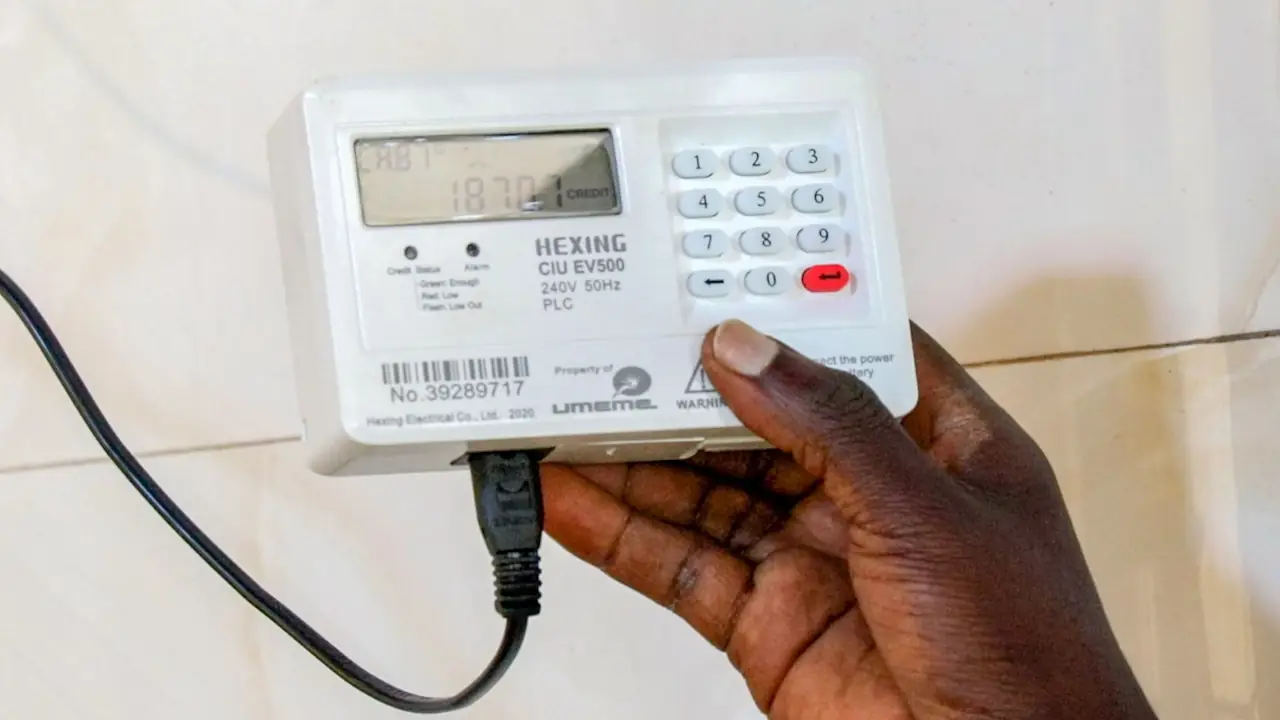
A first purchase in a month loses part of the payment before any electricity is bought. Value added tax at 18 per cent takes Shs1,525.4 of Shs10,000, and a service charge of Shs3,360 comes off the balance. ERA’s guidance for domestic customers says the charge applies to the first purchase in each billing cycle and that one missed in a month is deducted from the next payment.
Our explainer on domestic tariffs sets out the calculation and has a calculator that shows how many units a payment buys at any point in the month.
For a first purchase of Shs10,000 in a month, with no arrears, the result is:
- 16.8 units for a lifeline customer
- 6.6 units for a customer above the lifeline band
A second purchase of the same size later in the month carries no service charge and buys 10.9 units.
A customer above the lifeline band who missed the charge in one earlier month would have it deducted as well, which leaves 2.3 units from a first purchase. Neither that figure nor 6.6 matches the four or five units claimed, and without a receipt the cause cannot be established.
Customers made the same complaint in October 2024. The Daily Monitor reported one who said Shs10,000 had bought 3.8 units and another who said the same amount had bought 18 and advised buying at the end of the month. ERA’s guidance says the lifeline and cooking rates apply at any point in the month, so the timing of a purchase does not matter.
The cooking tariff
The cooking band charges 47.1 per cent less than the standard rate and saves up to Shs25,718 a month before VAT for a household not on the lifeline band that uses the whole band. ERA’s guidance says lifeline customers can use up to 20 units at the cooking rate.
A household must use 80 units, most of them at the standard rate, before the band begins at the 81st. The share of households cooking with electricity has risen only from 1.4 per cent to 1.7 per cent, according to Uganda Bureau of Statistics figures cited by the Economic Policy Research Centre, the policy think-tank. The centre said 73 per cent of recipients of electric pressure cookers did not know the tariff existed.
Neither ERA nor UEDCL has published how many customers reach unit 81 in a month, which would show how many can use the band.
($1 = Shs4,138.1, the Bank of Uganda’s closing mid-rate on 16 October)