
Quality Chemical Industries Limited (QCIL) has signed a sublicence with the Medicines Patent Pool (MPP) to manufacture a generic version of baloxavir marboxil, the single-dose influenza treatment sold by Roche as Xofluza, for supply across 129 low- and middle-income countries, the company announced on its website.
The agreement, disclosed on 25 September following a side event to the United Nations General Assembly in New York, makes QCIL one of 11 manufacturers named under a voluntary licence Roche granted to MPP in May. The others span India, China, Brazil, Indonesia, Malaysia, Nigeria, Ukraine and Vietnam. QCIL is the only sublicensee based in East Africa.
No financial terms were disclosed. Under the parent licence, sublicensees pay Roche no royalties on sales in low-income countries, 5 per cent of net sales in lower-middle-income countries and 10 per cent in upper-middle-income countries, with royalties lapsing once the underlying patent expires in each market. Roche will supply the reference product for bioequivalence testing, underlying technical data and regulatory waivers, but QCIL must still complete its own development, quality and regulatory work before it can sell the drug. Neither company gave a timeline.
Ajay Kumar Pal, QCIL’s chief executive, said in the company’s statement that the sublicence let it apply its “manufacturing and regulatory experience to an important influenza treatment for low- and middle-income countries.” QCIL, he said, would “now begin the development work required for a quality-assured generic version,” work he described as capable of “widening access to treatment while strengthening manufacturing capacity in Africa and preparedness for future influenza outbreaks.” The statement did not set out a timeline for that development work or say when commercial supply might begin.
Baloxavir marboxil works differently from older antivirals such as oseltamivir: it blocks an enzyme the influenza virus needs to replicate, and Roche says it remains effective against strains resistant to other antiviral classes. A single dose, rather than a five-day course, makes it easier to administer at scale, which is part of its appeal for pandemic preparedness planning as well as routine seasonal use.
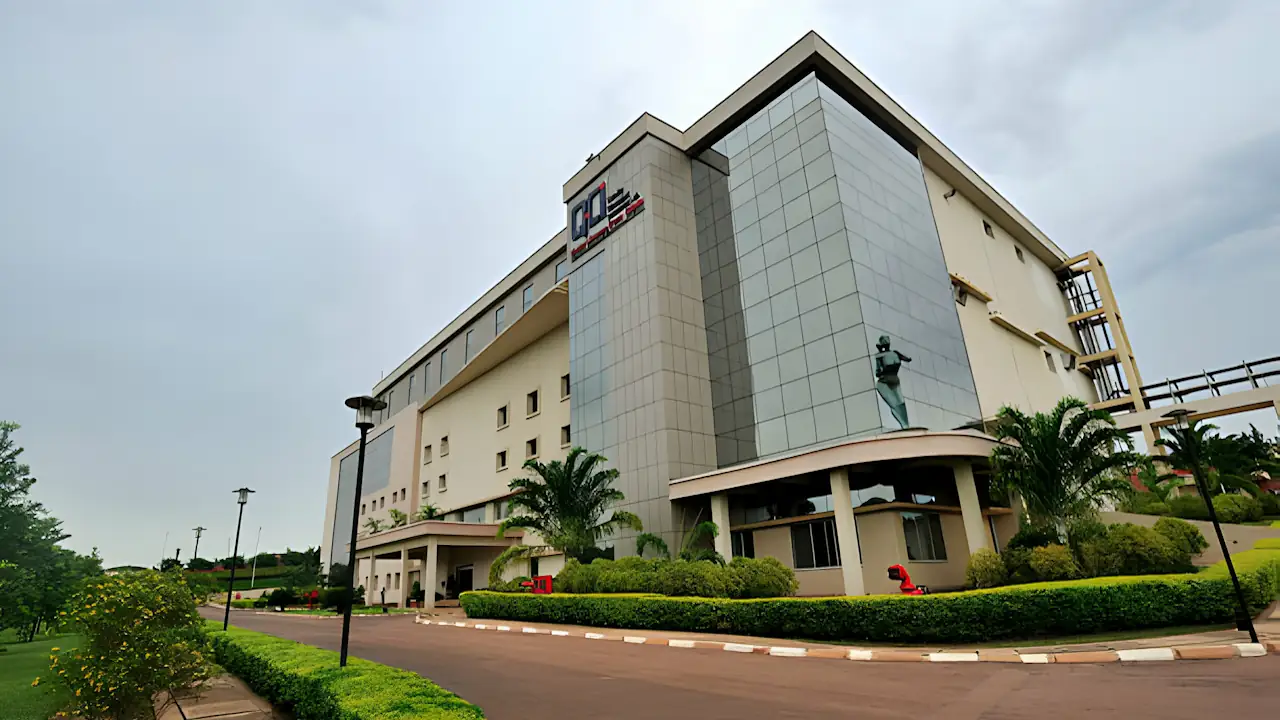
For QCIL, the sublicence extends a manufacturing base built on WHO-prequalified malaria and HIV medicines into a third therapeutic area. The Luzira-based company, majority owned by Africa Capitalworks SSA 3 and listed on the Uganda Securities Exchange, reported net profit of Shs56.4bn for the year to March 2026, up 39 per cent, as revenue rose 8.8 per cent to Shs290.5bn and gross margin widened to 46.7 per cent. It is also part-way through a second factory at its Luzira Industrial Park site, financed by a $36mn term loan and due for completion within 24 months, which the company says will add tuberculosis, sickle-cell-anaemia and injectable production lines alongside expanded capacity for its existing malaria and HIV medicines.
The influenza deal carries less certain commercial weight than that expansion, since MPP sublicences of this kind typically generate limited near-term revenue while manufacturers navigate registration; the value lies chiefly in diversifying what QCIL can produce and in the reputational credit of being chosen by a multinational originator for a global access programme. MPP, which brokers licensing agreements between originator pharmaceutical companies and generic manufacturers to widen access to medicines in poorer countries, cited “geographically diversified local production” as a criterion for selecting sublicensees, a signal that African manufacturing capacity is being weighed more seriously in pandemic-preparedness planning than in the past.
Whether the deal moves the needle for QCIL’s shareholders will depend on volumes an as-yet-unregistered product can achieve against established antivirals, and on how quickly the company can clear the regulatory steps that separate a signed sublicence from a saleable drug.